
Last updated November 22, 2026
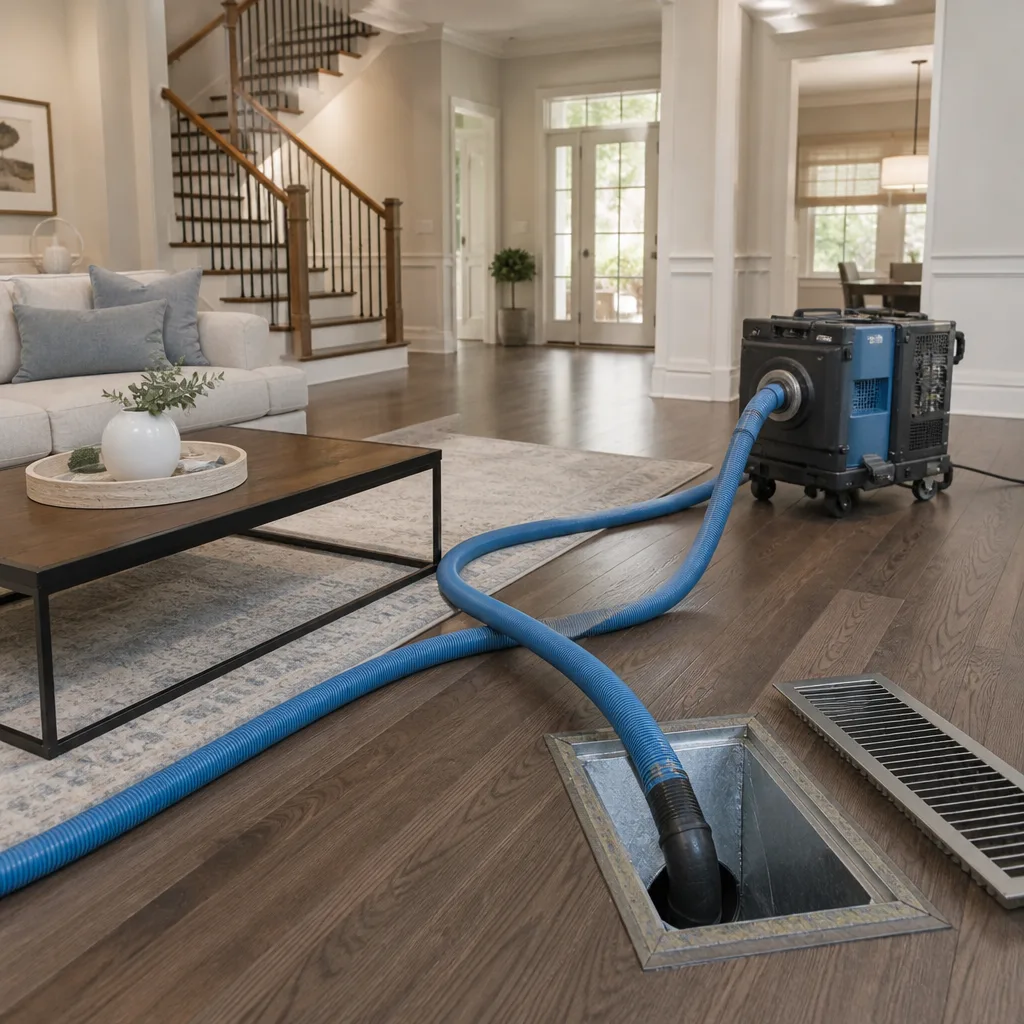 Whole-home duct cleaning
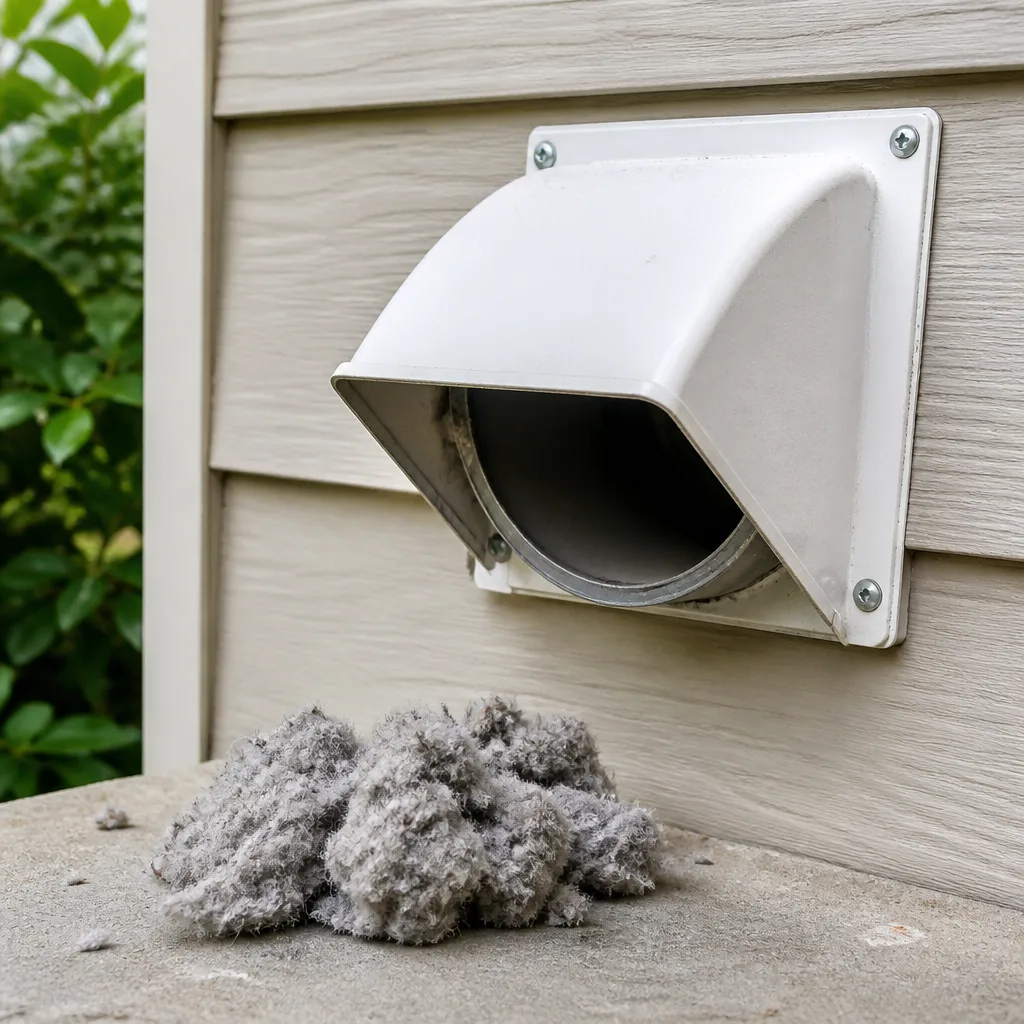 Dryer vent cleaning
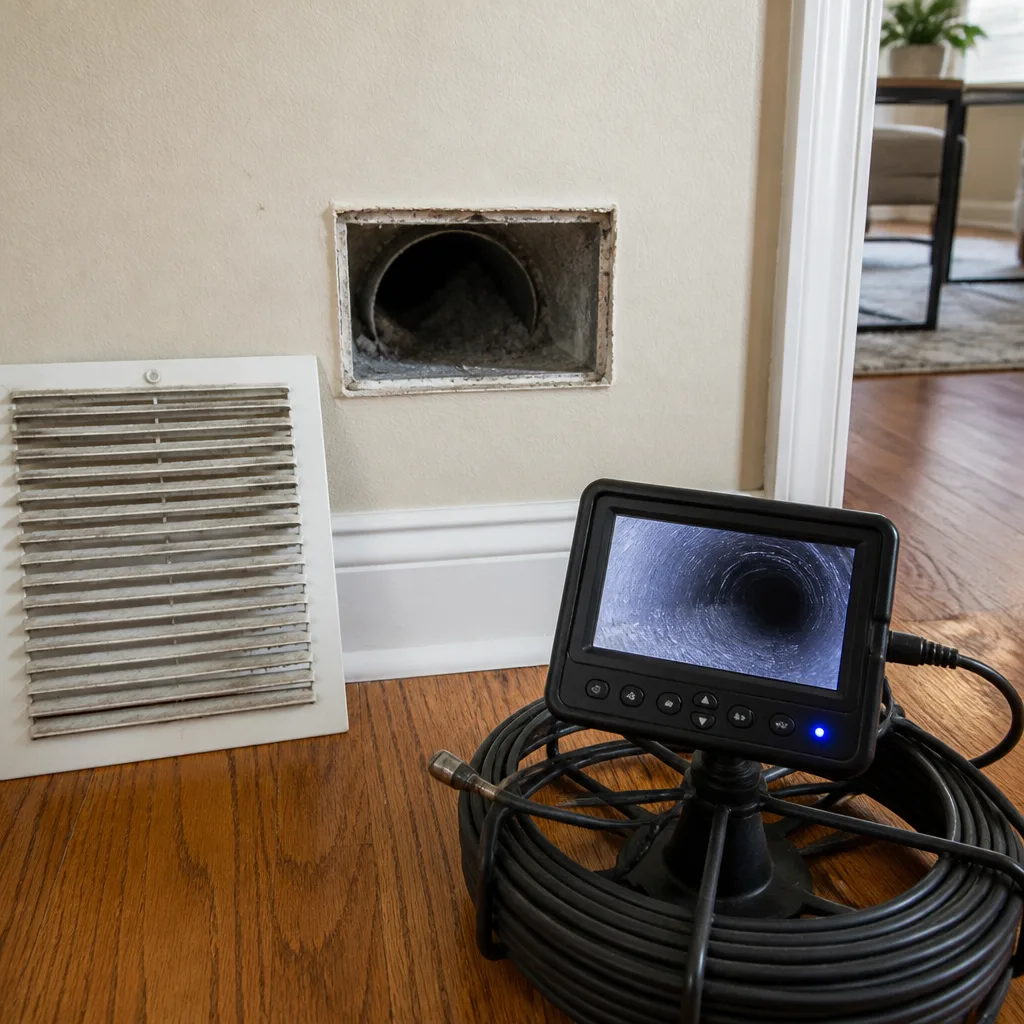 Camera inspection
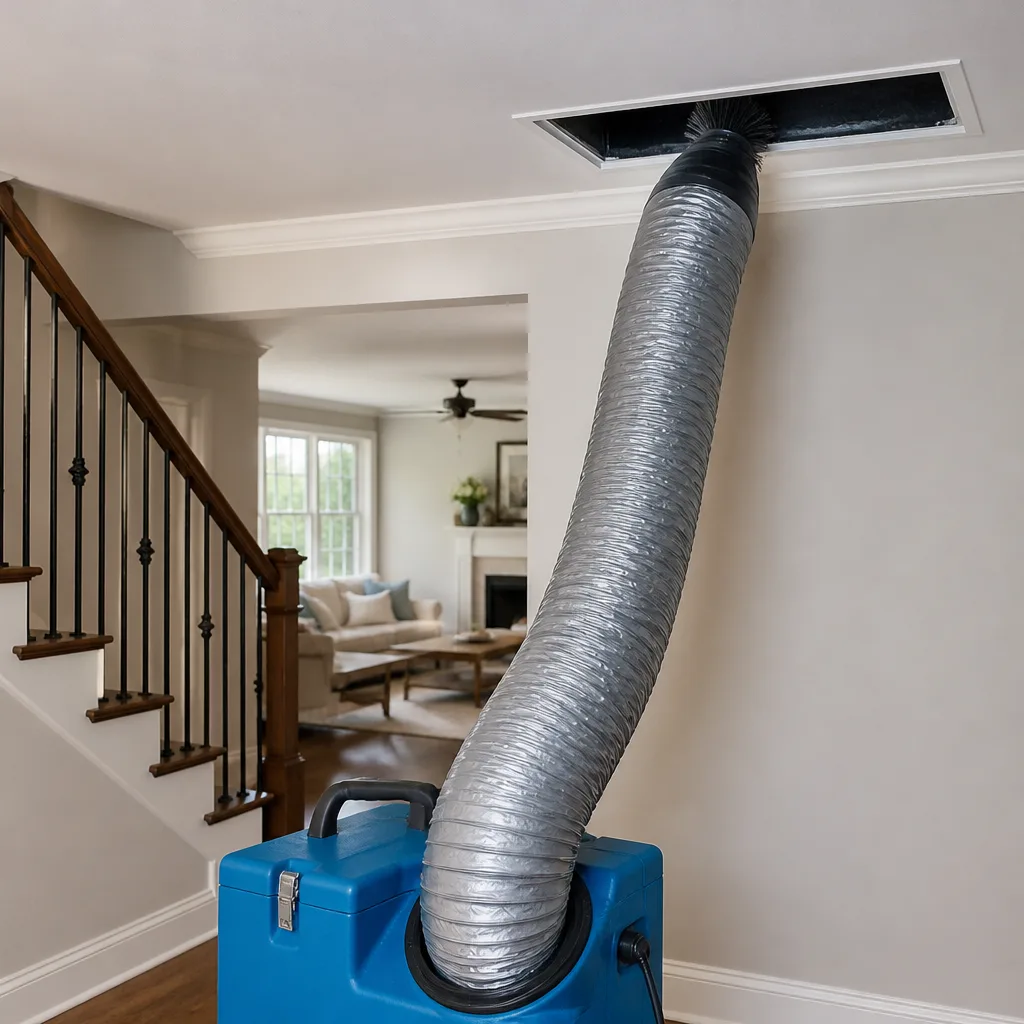 Sanitizing & deodorizing
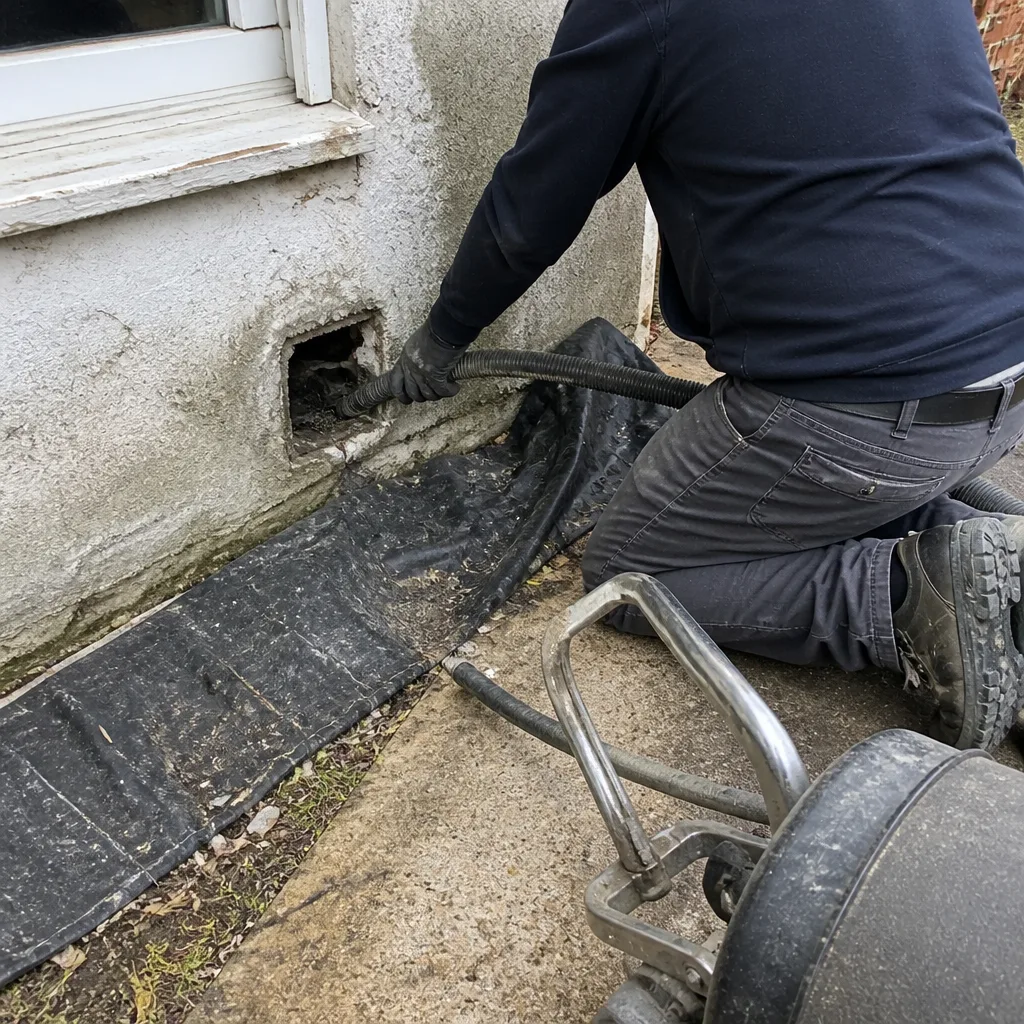
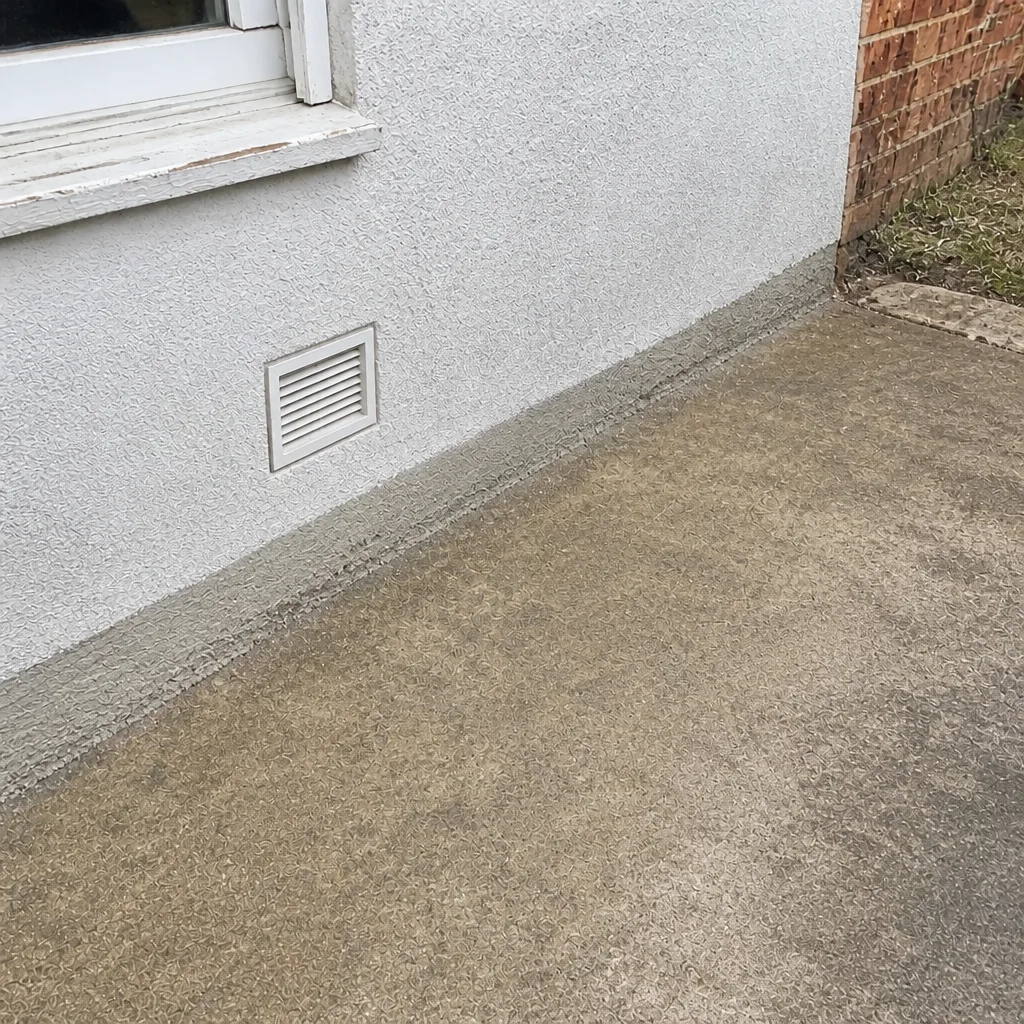
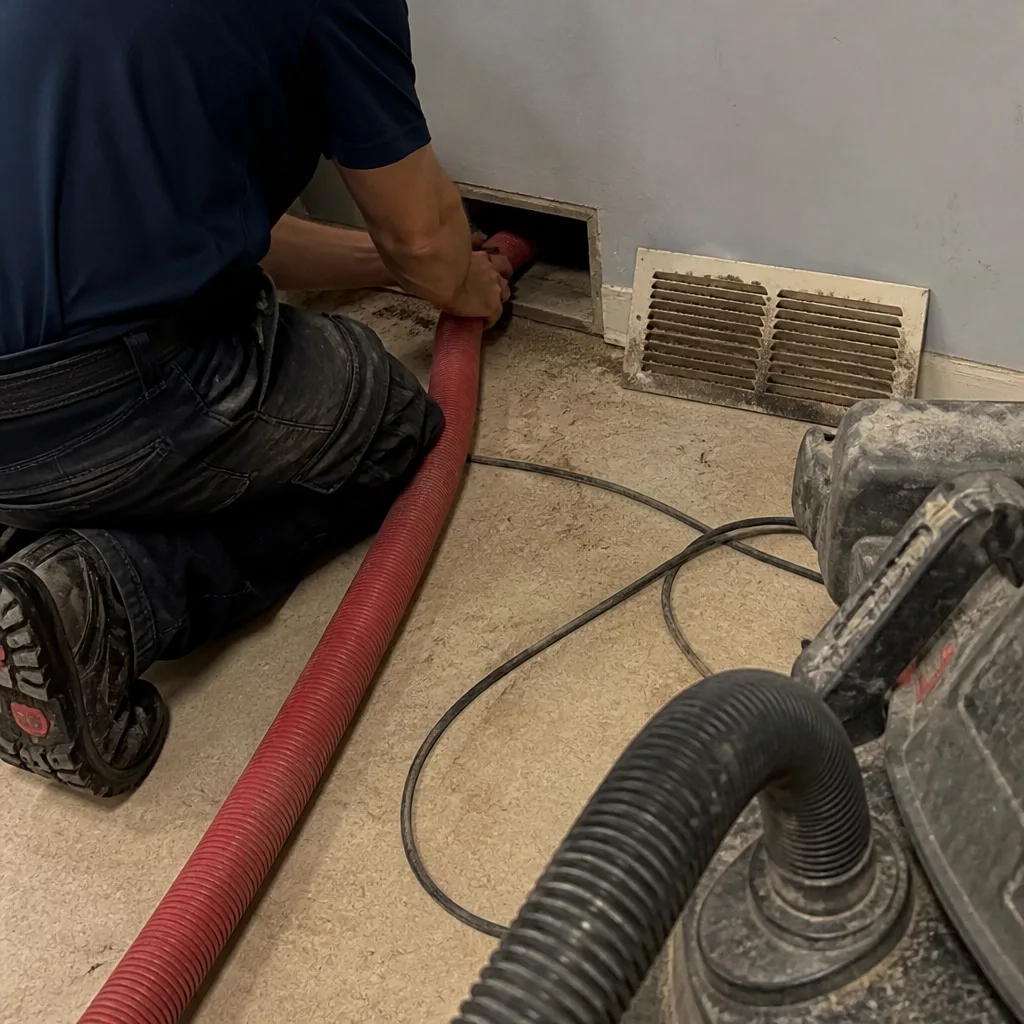
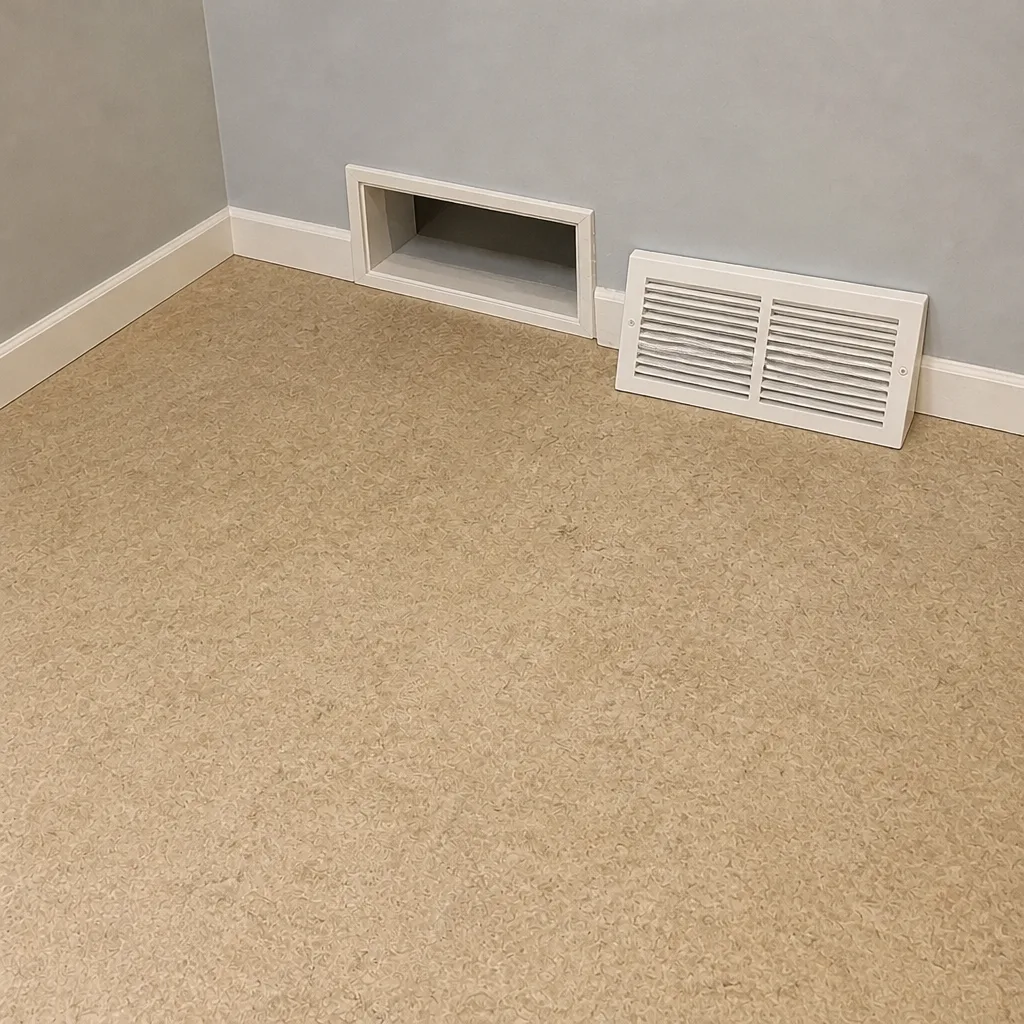
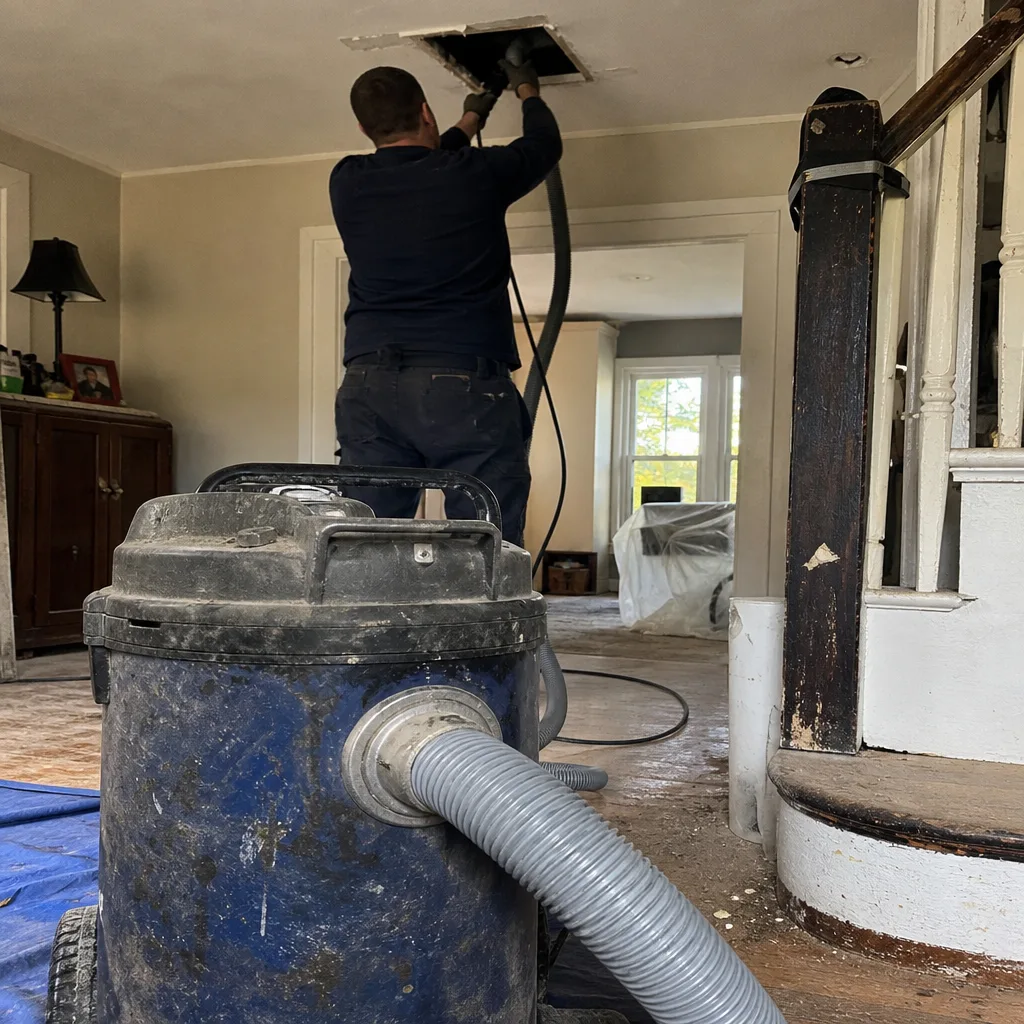
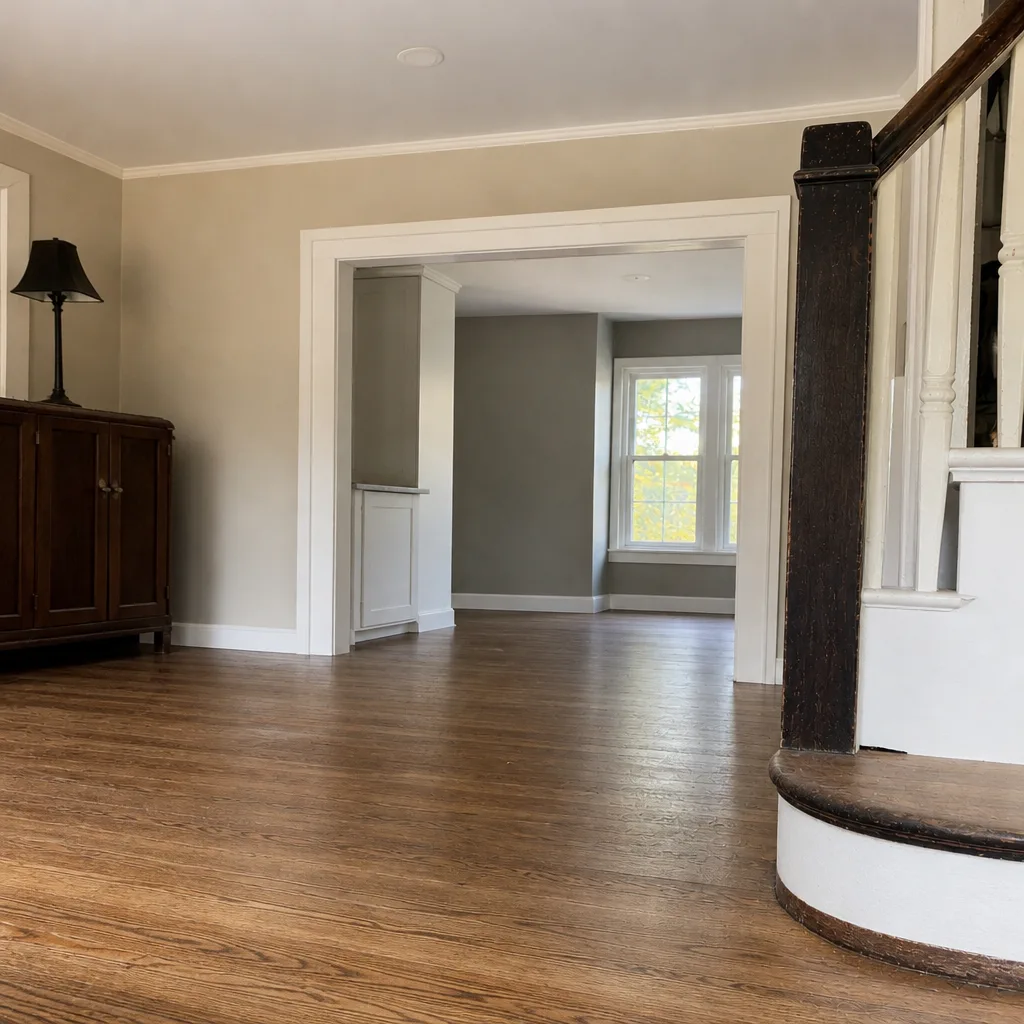
Whole-system duct and dryer vent check with before-and-after photos - you see exactly what came out of your vents
That "$99 whole-house special" is a bait ad - the real number appears once they are in your hallway, or the "clean" is a shop-vac at the register. We photograph the inside of your ducts before and after instead.
Air Duct Cleaning Troubleshooting in Oxford Circle: Common Problems and How to Fix Them
Replacing your air filter won’t fix a collapsed duct liner. Plenty of homeowners in Oxford Circle’s older rowhomes spend months doing exactly that, swapping filters and vacuuming registers, wondering why the musty smell comes back, why the bedroom never gets cold, why the dust keeps settling on the same shelf. The reason is simple: they’re treating a symptom without finding its cause. Most duct problems you can see or smell have several possible sources, and guessing wrong means paying for the wrong fix. This guide walks you through tracing each complaint back to what’s actually producing it, what to check yourself before calling anyone, and how to tell whether you need a cleaning, a repair, or both.
Styles & brands we work with
- Whole-home duct cleaning
- Dryer vent cleaning
- Camera inspection
- Sanitizing & deodorizing
Quick Answer
Most air duct problems in Oxford Circle homes fall into four source categories: accumulated debris in the ductwork, physical damage like crushed or disconnected flex duct, air leaks at joints and plenums, and moisture feeding microbial growth. A cleaning alone solves only the first. If your complaint is musty odor, uneven airflow to certain rooms, or dust that returns within days, the cause is usually damage or leakage, and cleaning without repairing or sealing first won’t fix it. Trace the symptom to its source before you spend anything.
Table of Contents
- Symptom-to-Cause Mapping: What Each Complaint Actually Means
- How to Inspect Your Own Ducts Before Calling Anyone
- Why Oxford Circle’s Older Housing Stock Creates Different Failure Points
- When Cleaning Fixes It, and When It Doesn’t
- The Diagnostic Questions a Qualified Contractor Should Ask You
- Dryer Vent Problems That Look Like Duct Problems
- Airflow and Noise Complaints: The Causes Homeowners Miss
- What Diagnostic Work and Repair Actually Cost
- Common Mistakes to Avoid
- When to Call a Professional
- Frequently Asked Questions
- The Bottom Line
Symptom-to-Cause Mapping: What Each Complaint Actually Means
Homeowners describe duct problems in terms of what they notice, not what’s wrong. Odor, dust, weak airflow, noise, and high energy bills are symptoms, and each one narrows the field of likely causes. Here’s how to read them.
- Musty or damp smell: Almost always moisture. The source is either a duct running through a humid space, condensation on cold sheet metal in summer, or biological growth on the interior liner. Cleaning removes the growth; it doesn’t fix the moisture source.
- Dust that returns within days: Debris in the ducts is one cause. A leaking return duct pulling air from a crawlspace, basement, or wall cavity is the other, and it’s the one homeowners miss. If dust reappears fast after cleaning, suspect leakage.
- Uneven airflow between rooms: A room that never heats or cools like the others usually has a crushed flex run, a disconnected joint, a closed or blocked damper, or a leaky trunk line. Cleaning doesn’t touch this.
- Whistling or rattling: Whistling points to a restricted or undersized run, or a leak at a joint. Rattling often means loose duct hangers, unsupported flex duct sagging against framing, or sheet metal panels vibrating.
- Higher energy bills with no equipment change: If the HVAC system is running more to reach the same temperature, leaking ducts in unconditioned space are a common culprit. Sealed ducts carry air where it’s meant to go.
In our experience, these symptoms overlap. A single failing flex connection behind a register can cause dust, weak airflow, and a higher bill all at once. Map every complaint before assuming one cause.
How to Inspect Your Own Ducts Before Calling Anyone
You can check a surprising amount without a ladder or a tool bag. A flashlight, a screwdriver, and twenty minutes at your registers will tell you whether you’re dealing with debris, damage, or leaks.
- Pop the register grille. Remove the grille and shine a light down the boot. You’re looking for visible dust build-up, debris, an interior liner that’s peeling or collapsing, or a flex duct connection that’s slipped off the boot collar.
- Check the flex duct connections. Flex runs are held to boots and takeoffs by zip ties or clamps over a collar. If the inner liner has pulled away, you’re leaking conditioned air into the wall cavity, and you’re pulling dusty air back in on the return side.
- Look at the plenum near the air handler. In many Oxford Circle basements, the plenum is accessible. Visible gaps, disconnected takeoffs, or duct tape that’s dried and falling off are all leaks that need sealing.
- Check for moisture. Look for water stains, rust on sheet metal, or a damp smell near the plenum and any duct passing through an unconditioned space. Moisture changes the diagnosis, so note it.
- Feel the airflow at each register. Hold your hand at each one in the house. A room with noticeably weaker flow than the rest is a data point pointing at a supply-side restriction.
What you should not do yourself is open the air handler cabinet or handle any wiring, and you shouldn’t be pulling components apart. Visual inspection at the registers and plenum is where you stop and call a professional.
Why Oxford Circle’s Older Housing Stock Creates Different Failure Points
Much of Oxford Circle’s housing was built before the 1970s, and a lot of it is served by original or partially-upgraded sheet metal ductwork. That era of construction has failure points newer homes simply don’t have.
- Pressed-fiber and taped joints. Older sheet metal runs were sealed with materials that dry out and fail over time. The seams that held tight in 1965 leak air and pull in dust today.
- Uninsulated trunk lines through unconditioned space. A cold trunk running through a humid basement or crawlspace sweats in summer. That condensation is a moisture source for anything growing on the interior liner.
- Retrofit flex duct added to older systems. When a system gets expanded, flex runs are often added onto sheet metal. Where the two meet is where damage concentrates, because the transition point isn’t always supported or sealed properly.
- Duct runs chased through walls with little slack. The result is crushed runs where a renovation or a piece of furniture forced the duct into a tight space, restricting airflow to a whole room.
- Interior liner degradation. Some older rigid and flex duct has an internal acoustic liner that can peel and collapse. Once it goes, no amount of cleaning brings the airflow back. That’s a repair, not a cleaning.
What this means practically: in an older Oxford Circle rowhome, a “duct cleaning” that only vacuums the runs will miss the two biggest problems, leakage and crushed or disconnected runs. Cleaning is the right answer when the system is intact. When it isn’t, cleaning comes after the repair.
When Cleaning Fixes It, and When It Doesn’t
Cleaning solves one class of problem: contaminated surfaces. If the ducts are structurally sound, connected, and sealed, and the complaint is accumulated dust, debris, or microbial growth, professional cleaning with the right equipment is the fix. When the system is leaking or the ductwork is damaged, cleaning is a step, not the solution, and on its own it wastes money because the underlying problem returns.
Here’s the decision rule we use:
- Clean: Ducts are intact and connected, but you’re seeing visible debris, dark staining on the liner, or a musty smell you can trace to growth inside a run.
- Repair, then clean: Flex duct slipped off a boot, a crushed run, a collapsed liner, or disconnected components. The system has to be physically right before cleaning is meaningful.
- Seal, then clean: Leaks at joints, plenums, and takeoffs. Sealing closes the loop so the system stops pulling contaminated air in and stops losing conditioned air out.
- Address the moisture first: If you’re finding actual water, condensation, or damp insulation, that has to be solved before cleaning. Otherwise growth comes back.
This is why a proper air duct cleaning visit starts with a diagnostic walk-through rather than a vacuum. Cleaning, repair, and sealing are three different jobs, and the right sequence varies by what the inspection turns up. We clean it, repair it, and seal it because your HVAC system is only as clean as its weakest point.
The Diagnostic Questions a Qualified Contractor Should Ask You
A crew that arrives, drags a machine in, and starts vacuuming before asking a question is a warning sign. Diagnosis comes before the machine. Here’s what a serious contractor asks, and what it means if they skip it.
- “What are you actually noticing?” Odor, dust, airflow, noise, or bills. The answer steers the whole inspection. If they don’t ask, they don’t know what to look for.
- “How long has it been happening, and does it come and go?” Seasonal patterns point to condensation and humidity. Year-round, steady problems point to structural causes.
- “Has anything changed recently?” Renovation, new furniture, an HVAC replacement, or a new appliance. Change often reveals the cause.
- “Which rooms are affected?” Room-specific complaints usually mean a run-specific problem, not a whole-system issue.
- “Have you had any water intrusion or leaks?” Moisture is the single biggest driver of microbial problems in a duct system.
- “Do you know the age of your ductwork?” Older Oxford Circle homes have different insulation and sealing characteristics than newer ones, and the approach changes.
What it means if the questions are skipped: they’re selling a clean, not solving a problem. A contractor who doesn’t ask what’s wrong can’t know when the work is done, and you shouldn’t pay for that. The equipment we operate, including Rotobrush and Nikro systems, matters, but it’s only as good as the diagnosis driving it. We also use Abatement Technologies negative-air and HEPA equipment so the dust we’re pulling out stays contained.
Dryer Vent Problems That Look Like Duct Problems
Some complaints that feel like an air-duct issue are actually a dryer vent issue. Lint build-up in the dryer vent slows drying, generates a smell, and adds dust back into a laundry area, and it’s one of the classic fire-risk problems in any home. If your complaint is restricted to the laundry area, dust that keeps reappearing around the dryer, or clothes taking a second cycle to dry, the dryer vent is the first thing to rule out.
The inspection is quick. A flexible brush or a camera run through the vent from the wall end to the exterior hood tells you what’s inside. A clogged or partially blocked exhaust is a safety problem, not a performance issue, and it should be handled by a professional because opening up a vent run routed through a wall is more involved than reaching behind the dryer. dryer vent cleaning is a separate service for a reason: it protects a different pathway and a different problem.
Airflow and Noise Complaints: The Causes Homeowners Miss
Whistling at a register, a rattle in the walls when the system starts, or a bedroom that never gets the same airflow as the rest of the house: these fall into the category homeowners most often misdiagnose. Cleaning won’t fix any of them, because the cause is physical.
- Undersized or restricted runs. A duct sized for the original system may not handle a larger central unit that was installed later. The airflow gets pinched at the run, and the whistle is the air forcing through a narrow point.
- Closed or blocked dampers. A damper accidentally closed during a previous service call, or one blocked by a piece of framing or furniture, will starve a room. It’s an easy check.
- Loose hangers and framing contact. Duct that’s sagging into framing rattles at start-up and shut-down. That’s a mechanical fix, not a cleaning issue.
- Liner delamination. Interior acoustic liner that has started to peel flaps inside the run and produces a rumble or flutter. Once it’s delaminating, cleaning doesn’t restore it, and the run usually needs to be replaced or re-lined.
If the noise is coming from the air handler itself rather than the ducts, that’s an HVAC cleaning question. A dirty blower wheel, a fouled evaporator coil, or debris in the cabinet all affect airflow and noise at the equipment, and they’re part of the full air pathway, not the ducts.
What Diagnostic Work and Repair Actually Cost
Pricing in Oxford Circle follows the work, not the number of vents. Cleaning is priced by the system and its condition. Repair and sealing are priced per issue. Any honest contractor gives you a written estimate after the diagnostic walk-through, and that written estimate sets the final price. Here’s what to expect in terms of the shape of the numbers, since exact figures depend on the home:
- Full-system cleaning: Priced per system, based on the number of runs, the size of the plenums, and the condition of the system. It’s not a per-vent figure, and quotes that offer a low per-vent price and then grow once the technician is on site are the bait-and-switch pattern to avoid.
- Duct repair: Priced per issue. A disconnected flex run at a boot is a small job; multiple crushed runs or a collapsed liner across several spaces is a larger one. Written estimate before work starts.
- Duct sealing: Priced by accessibility, since leaks behind drywall or in tight chase spaces take more time than leaks in an open basement.
- Sanitizing or air-quality treatment: Priced separately from cleaning, and it should be. Sanitizing a dirty duct is wasted work, so the cleaning has to come first.
- Whole-home filtration upgrades: If the diagnostic shows filtration is the missing piece, a Honeywell or Aprilaire filtration upgrade gets quoted as its own line item. That’s a filtration upgrade, not a duct cleaning add-on.
For the record: we don’t quote a per-vent price, we don’t offer a teaser coupon figure, and we don’t surprise the invoice. One flat price per system, agreed before work starts, with before-and-after photos of your own ducts so you can see what we pulled out. If a quote is significantly cheaper than the rest, ask what it covers and what it doesn’t. Cheap quotes tend to cover less ductwork, skip the plenum and the air handler, and leave the damage in place.
Common Mistakes to Avoid
- Treating every complaint as a cleaning problem. Cleaning doesn’t fix crushed flex duct, disconnected runs, or leaking joints. If the underlying issue isn’t addressed, the symptom comes back within weeks and you’ve paid twice.
- Skipping the return side. Most complaints that persist after a cleaning come down to the return ducts, which many cheap contractors don’t actually open. Your HVAC system is only as clean as its weakest point, and that’s often the return.
- Buying on the coupon price. A low per-vent price that grows when the technician is on site is the pattern to walk away from. Ask for a flat price per system in writing before any work begins.
- Assuming your older Oxford Circle rowhome has the same duct layout as newer construction. It doesn’t. Pre-1970s sheet metal systems have joints, transitions, and moisture issues that newer homes don’t, and the diagnostic work has to account for them.
- Cleaning before repairing. A cleaned but leaking duct system still pulls in contaminants and still wastes energy. Seal first, then clean, or both together.
- Ignoring the dryer vent because it “seems fine.” Restriction in a dryer vent is a real fire risk and it’s an easy check. Don’t wait for a symptom that forces the issue.
- Sanitizing as a substitute for cleaning. Sanitizing a dirty system is wasted work. Mechanical cleaning removes the material; sanitizing treats the surfaces that remain.
When to Call a Professional
You should call a professional if any of these are true: you’ve found water or damp insulation anywhere in the duct system; you’ve found a disconnected or crushed flex run that you can see but shouldn’t open up; you’re seeing a peeling or collapsed interior liner; you’re experiencing a persistent musty smell that returns after cleaning; your dryer takes twice as long to dry clothes; airflow to a room has dropped sharply and you can’t find a closed damper; or you’re planning a renovation and want the duct system inspected before walls close back up. Those are all cases where the diagnostic step matters more than the cleaning, and where doing the wrong job first costs more than the right one.
Air Duct Cleaning Oxford Circle offers free estimates in Oxford Circle. Call (833) 498-1334. We answer 24/7. Fast dispatch from 7am to 7pm, Sunday through Friday. The local professional we connect you with arrives, walks the system with you, and puts one flat price per system in writing before any work starts.
Frequently Asked Questions
Air duct cleaning in Oxford Circle is priced per system, not per vent, and the figure depends on the number of runs, the size of the plenums, and the condition of the system once it’s inspected. We don’t quote a teaser per-vent price or a low coupon figure. One flat price per system, agreed before work starts, based on a written estimate from the diagnostic walk-through. Call (833) 498-1334 for an exact quote. Estimates are free, and we answer 24/7.
Cleaning fixes a musty smell only if the source is contaminated surfaces inside a structurally sound duct system. If the smell comes from moisture, condensation, or a leak pulling air from a damp space, cleaning alone won’t solve it and the smell will return. The right first step is to trace the moisture source. In our experience, that’s the most common reason a duct cleaning “didn’t work”: moisture was never addressed.
Cheap quotes usually cover less: fewer runs, no return-side cleaning, no plenum or air handler work, no diagnostic inspection, and no repair if something’s found. What’s left is a visible-machine run that pulls some surface dust and leaves the damage. Ask three questions of any quote: what’s included, whether the returns and air handler are covered, and whether the price is a flat per-system figure or a per-vent figure that grows on site. Call (833) 498-1334 for a written flat-price estimate.
Before-and-after photos of your own ducts, taken during the job, are the honest answer. Any contractor can hand you an invoice; the photos are what prove the material came out. Ask before the work starts whether you’ll be getting them. We take them on every job for exactly this reason. If a contractor hesitates on that question, that’s your answer.
There’s no fixed schedule that fits every Oxford Circle home. A well-sealed, well-filtered system can go several years between cleanings. A system that’s leaking, has visible liner damage, or serves a home where someone has respiratory sensitivity usually benefits from more frequent attention, and honestly, from repair first. What matters is diagnosis, not a calendar. If the ducts aren’t pulling in contaminants and aren’t accumulating debris, cleaning early is a wasted call.
No, and doing it can make things worse. A shop vacuum doesn’t have the airflow or the containment to pull material from deep runs, and pushing a hose into ducts you can’t see inside can dislodge debris or damage the liner. Professional equipment, including Rotobrush and Nikro systems and Abatement Technologies negative-air and HEPA units, exists because consumer tools can’t do this job. The right DIY move is the visual inspection at your registers and plenum, then a call. Call (833) 498-1334. Estimates are free.
The Bottom Line
Most air duct problems in Oxford Circle aren’t cleaning problems, they’re diagnosis problems. Dust, odor, uneven airflow, and noise are symptoms, and each one points to a small set of causes that a proper walk-through can sort out. Older rowhome systems have failure points newer construction doesn’t: failing joints, moisture in unconditioned spaces, retrofitted flex, collapsing liner. Cleaning fixes contaminated surfaces on an intact system. Repair and sealing fix the system itself. Getting the order wrong means paying twice. Trace the symptom, inspect what you can see, and hire the contractor who asks questions instead of the one who starts vacuuming.
If you’re ready to stop guessing, call Air Duct Cleaning Oxford Circle at (833) 498-1334 for a free estimate. We answer 24/7. Fast dispatch from 7am to 7pm, Sunday through Friday. One flat price per system, agreed before work starts, with before-and-after photos of your own ducts on every job, and one contractor for the full air pathway rather than three separate phone calls.
Written by the team at Air Duct Cleaning Oxford Circle.
See the difference
 Before
 After
 Before
 After
 Before
 After