
Last updated November 22, 2026
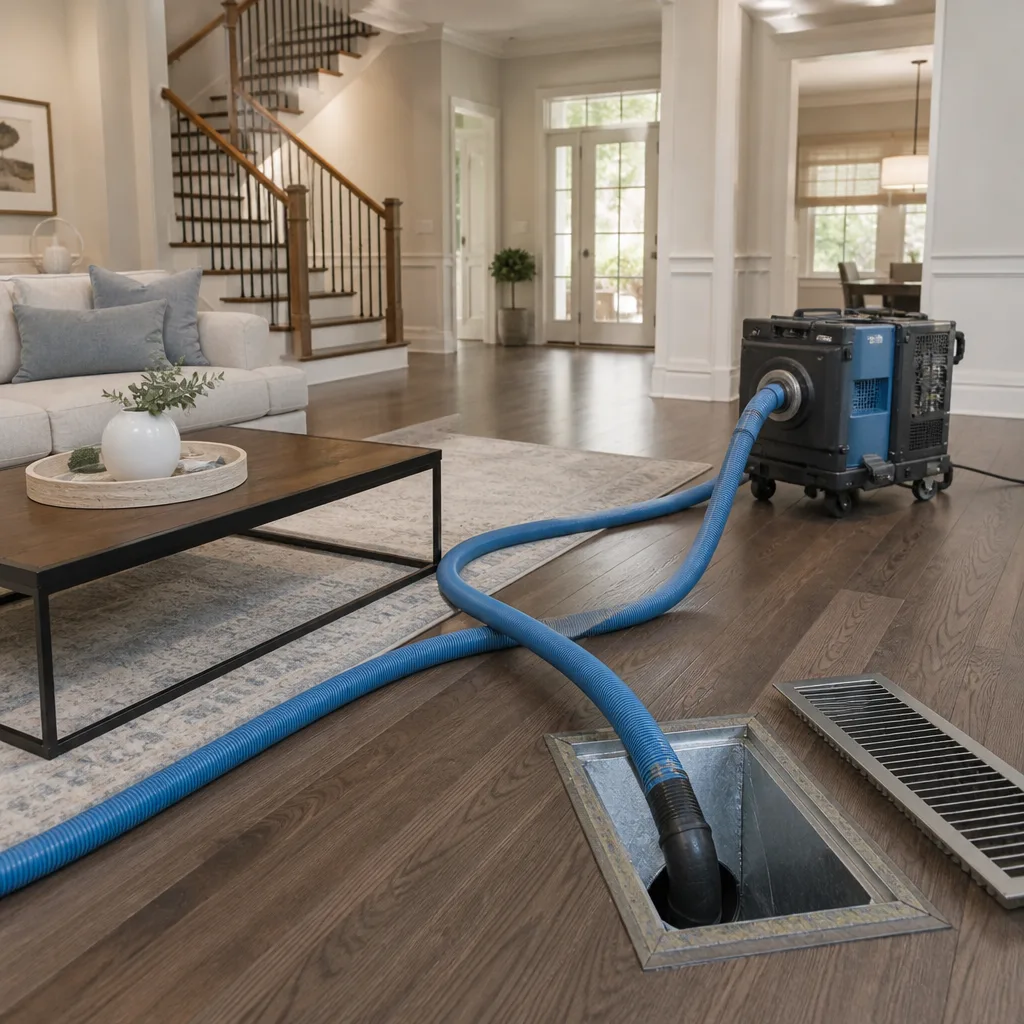 Whole-home duct cleaning
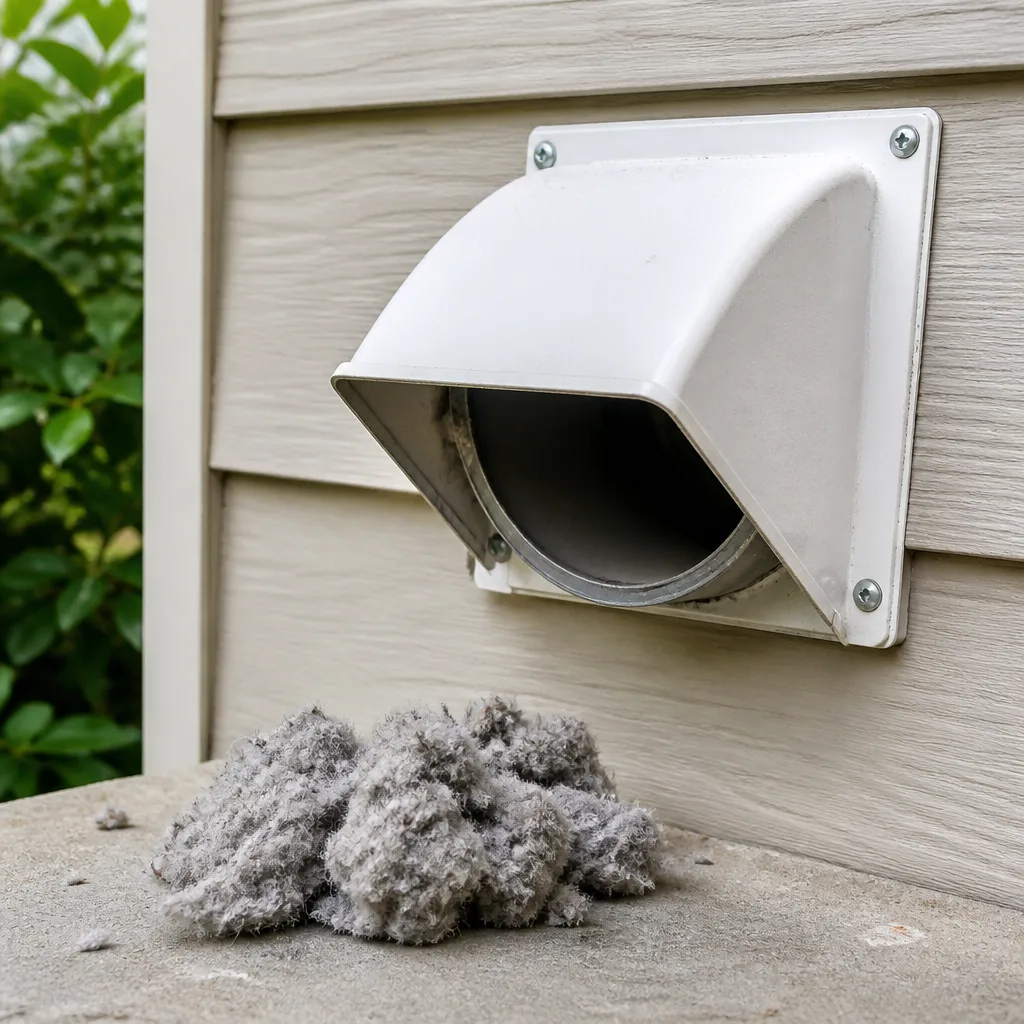 Dryer vent cleaning
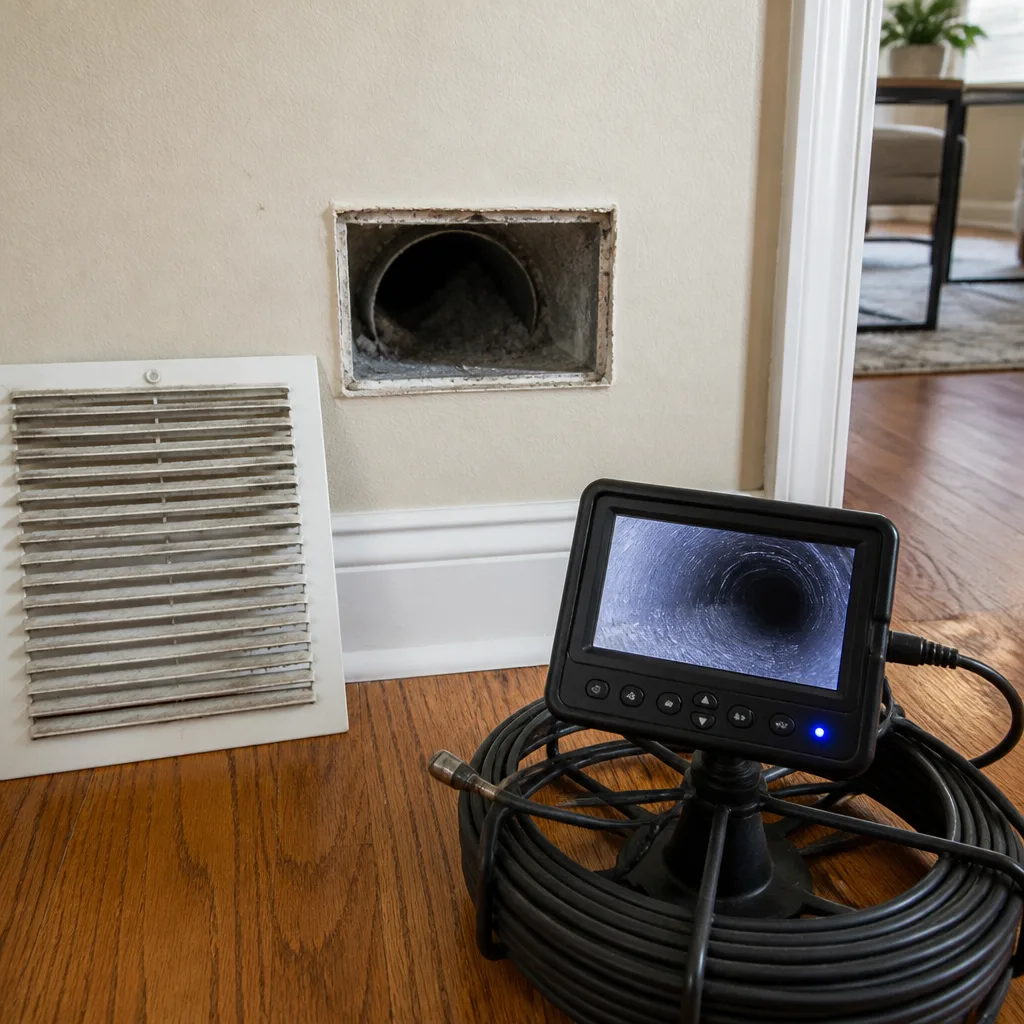 Camera inspection
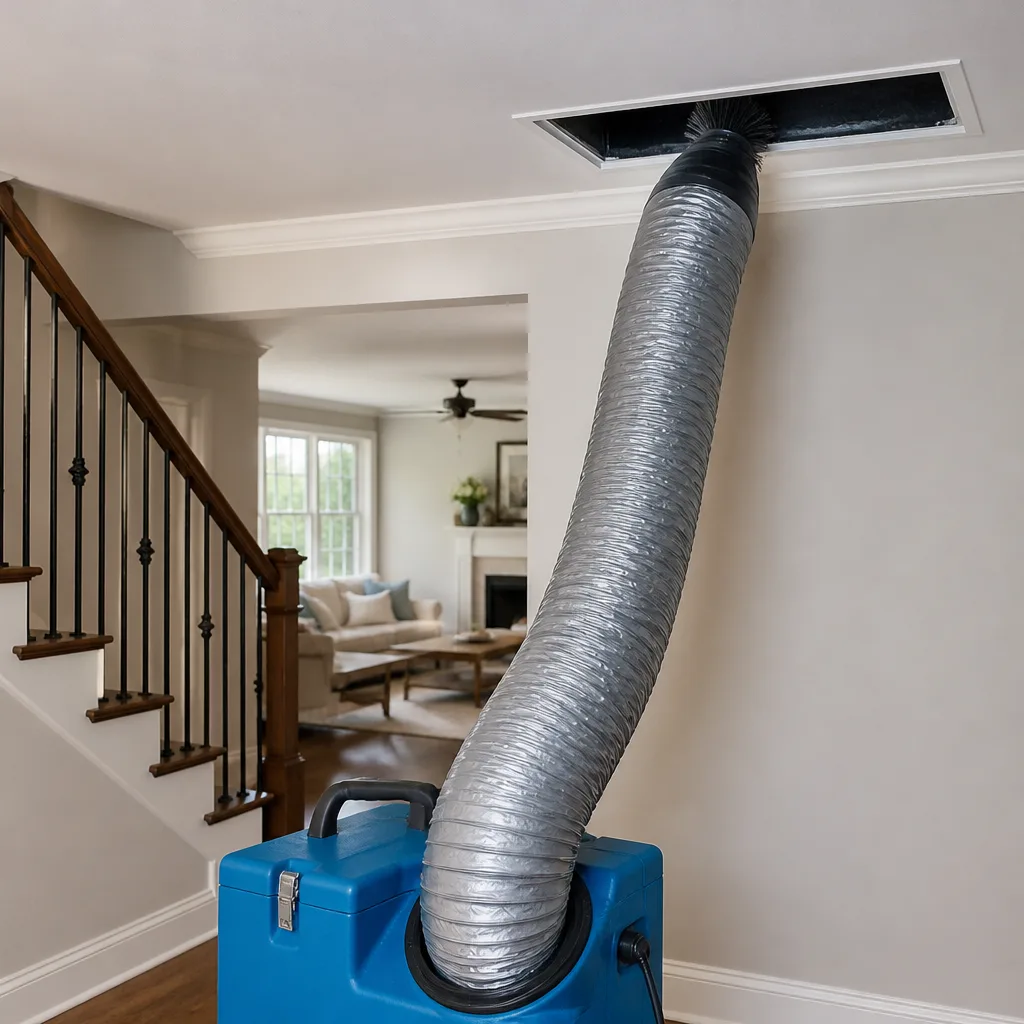 Sanitizing & deodorizing
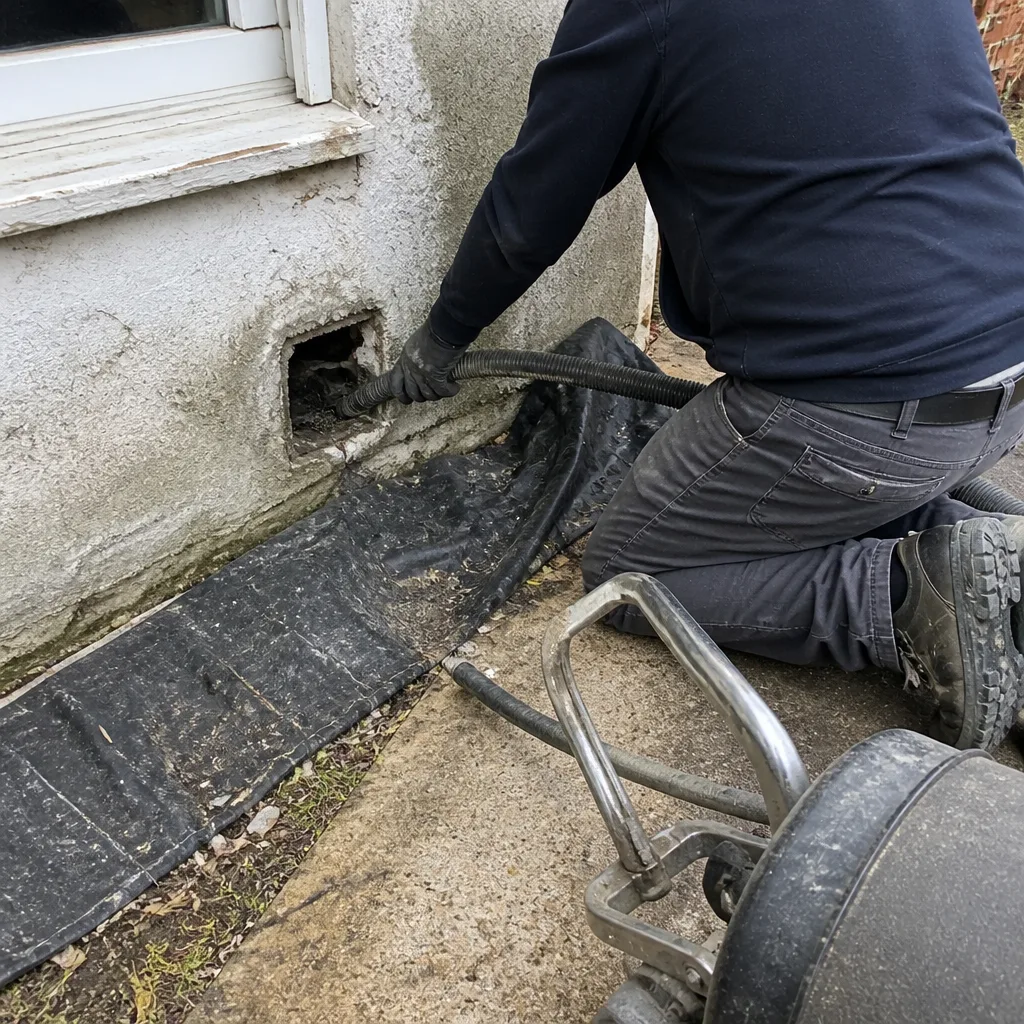
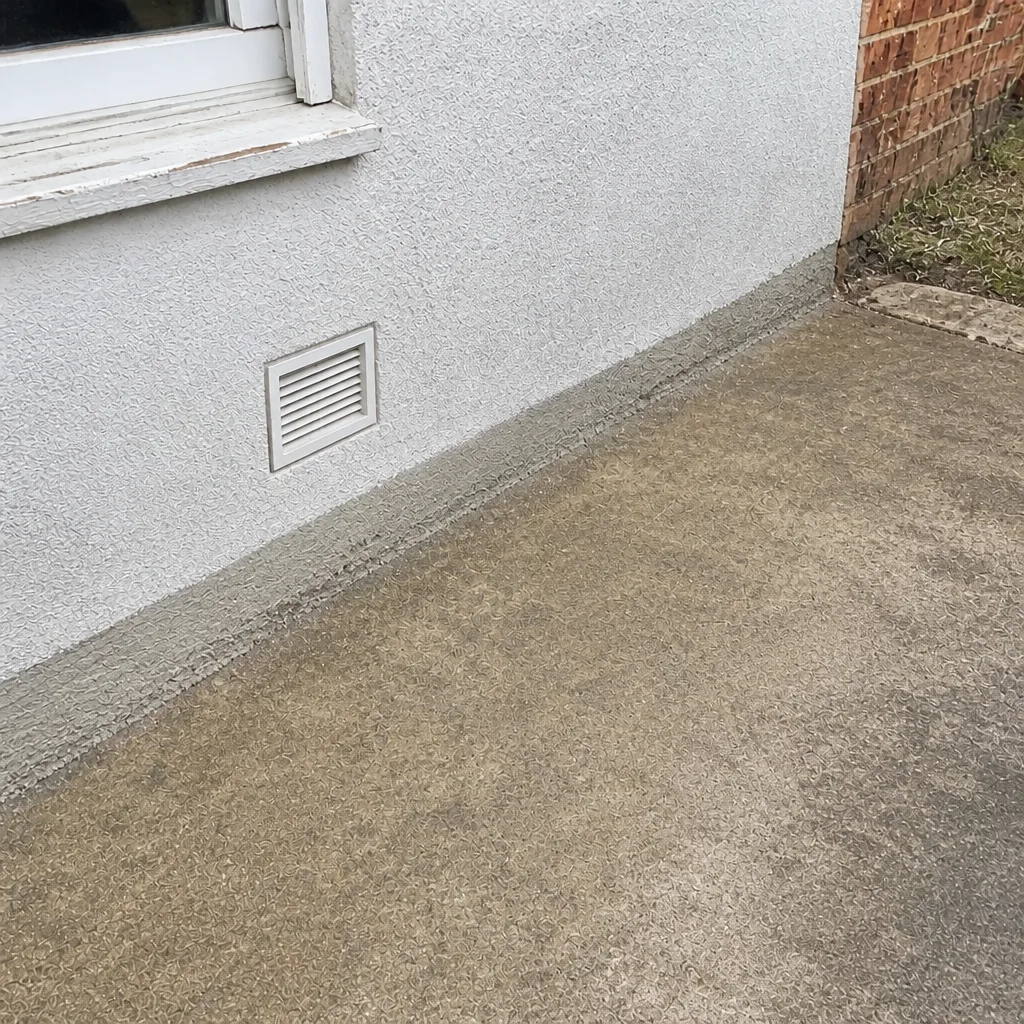
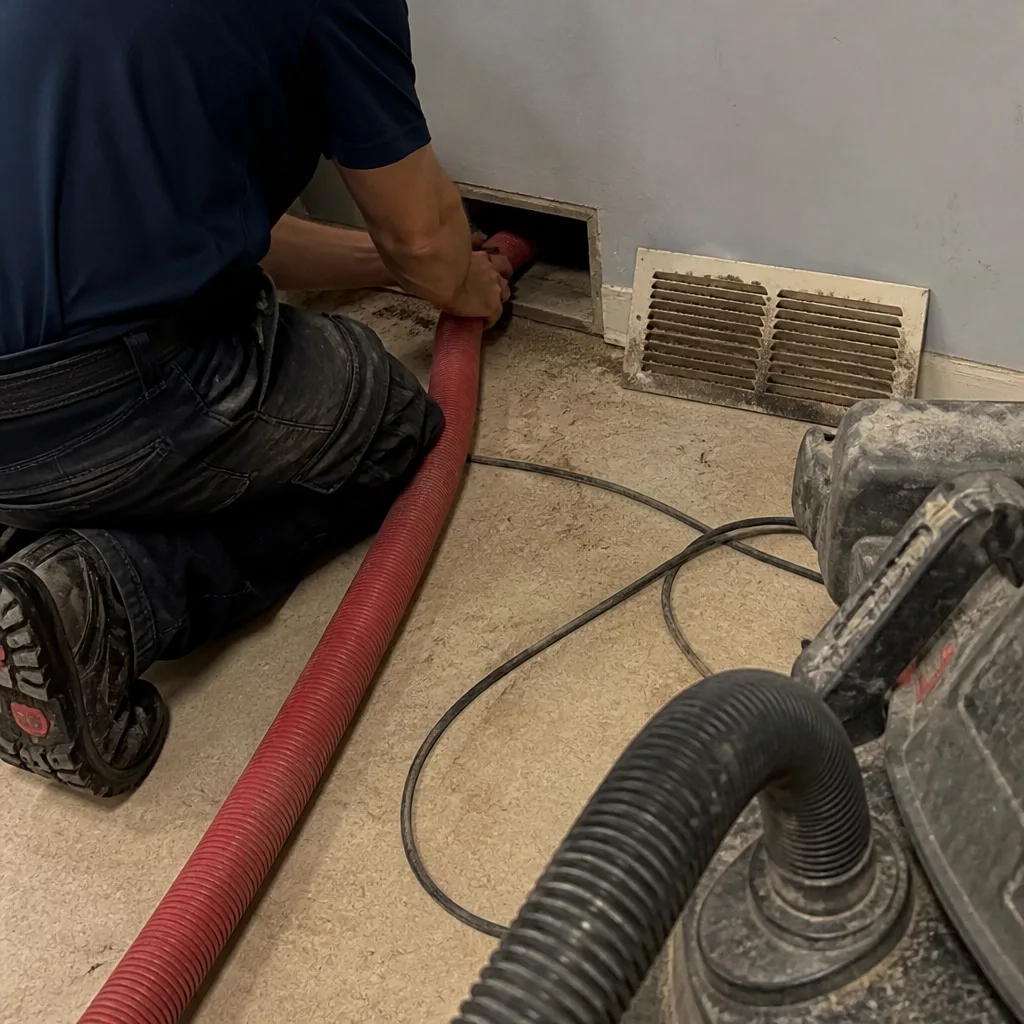
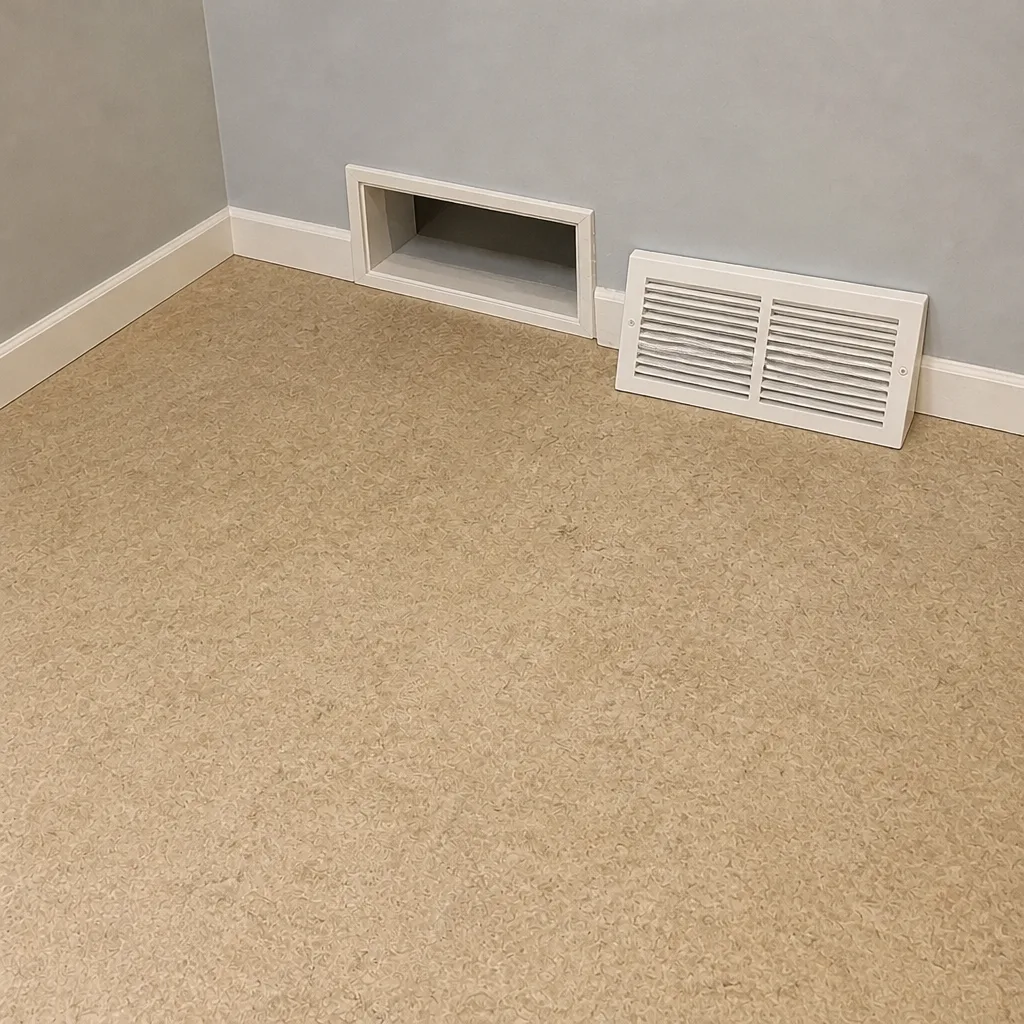
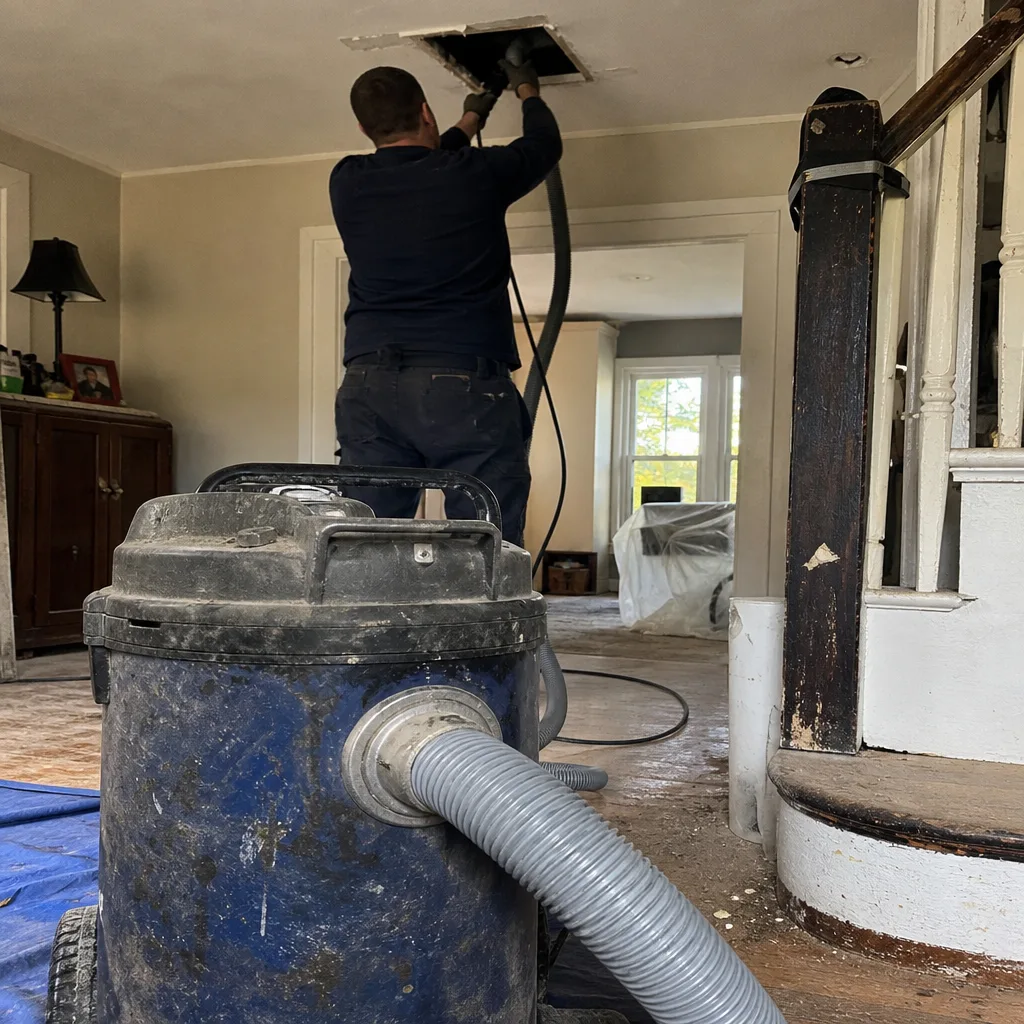
Whole-system duct and dryer vent check with before-and-after photos - you see exactly what came out of your vents
That "$99 whole-house special" is a bait ad - the real number appears once they are in your hallway, or the "clean" is a shop-vac at the register. We photograph the inside of your ducts before and after instead.
Air Duct Cleaning Maintenance Checklist for Oxford Circle Homeowners
Most homeowners treat duct maintenance as a once-a-year phone call. The filter gets changed when someone remembers, the ducts get cleaned when airflow drops, and nothing in between gets written down. That gap is where small problems grow quietly. The filter you changed last month may already be clogged, and the reason has less to do with your house than with where it sits: Oxford Circle runs alongside Roosevelt Boulevard and close to I-95, a corridor that pushes fine particulate traffic through the air faster than a filter manufacturer’s printed interval can account for. What follows is a working checklist, built for the specific seasons, housing stock, and street-level conditions of Oxford Circle, that turns duct care into a record you keep rather than a chore you postpone.
Key Takeaways
- A duct checklist works best as a written log of filter changes, airflow observations, and photos, not as a calendar reminder.
- Philadelphia’s heating and cooling seasons create predictable stress points, and Oxford Circle homes hit them earlier and harder than the filter box suggests.
- Older Oxford Circle houses hide most duct problems in flex connections, plenum seams, and basement returns.
- A tissue test at each register each month catches developing blockages before they show up on an energy bill.
- Some checklist items are routine homeowner work. Others are signals that a trained professional with professional-grade equipment should be called.
Quick Answer
A practical air duct maintenance checklist for Oxford Circle homeowners covers four recurring tasks: logging every filter change with a photo, testing airflow at each register once a month, inspecting accessible flex-duct connections and plenum seams, and scheduling a full professional cleaning based on what the log shows rather than on a fixed interval. The checklist is a record of your system’s condition, and the record is what tells you when to call.
Call (833) 498-1334. We answer 24/7. Fast dispatch from 7am to 7pm, Sunday through Friday.
Styles & brands we work with
- Whole-home duct cleaning
- Dryer vent cleaning
- Camera inspection
- Sanitizing & deodorizing
Table of Contents
- Why a Checklist Beats a Reminder
- The Oxford Circle Seasonal Calendar: Month by Month
- How to Run a Tissue Test at Every Register
- What to Photograph and Record at Every Filter Change
- Checklist Items Specific to Older Oxford Circle Homes
- Owner Task or Professional Call? A Simple Test
- The Full-System View: What a Professional Visit Should Cover
- Common Mistakes to Avoid
- When to Call a Professional
Why a Checklist Beats a Reminder
A reminder tells you to do something. A checklist tells you what happened the last time you did it, and that difference matters more in duct work than almost anywhere else in home maintenance. Duct problems develop gradually. A return grille that slowly collects dust, a flex connection that sags a little more each season, a filter that clogs faster in spring than in winter: none of these announce themselves. They show up as a pattern, and a pattern only exists if it’s written down.
In our experience, homeowners who keep even a simple written log make better decisions about their systems than homeowners who rely on memory. They notice that a filter lasted two months in one house and six weeks in another. They can tell a technician exactly which room feels weak and when it started. They can describe whether a musty smell appeared after a rain spell or during the first week of heating season.
That record has a second use. When it’s time to have the system professionally cleaned, the log tells the technician where to focus. Oxford Circle houses are not uniform. Some are post-war rowhouses with short, direct duct runs. Others are larger twins with longer branches and more connections to fail. A log that says “bedroom two has been weak since October” is worth more than a general instruction to clean the whole system, because it points the equipment at a specific problem.
The checklist that follows is built around that principle. Each item produces a record. The record produces a decision. Start with Air Duct Cleaning Oxford Circle if you want the professional side of the picture first, then build the log around it.
The Oxford Circle Seasonal Calendar: Month by Month
National maintenance advice usually breaks the year into two seasons and calls it done. Philadelphia’s climate doesn’t cooperate. Oxford Circle sits in a stretch of the city where summers run humid and hot, winters swing between mild spells and hard freezes, and the shoulder seasons bring pollen and leaf debris in volume. The result is a maintenance calendar with more transitions than the generic version accounts for.
Here’s how we’d structure the year for an Oxford Circle home:
- Late February into March: Before the first warm stretch, check the filter and note its condition. Heating season has just run for months, and this filter has done the heaviest work of the year. Photograph it. This photo becomes your baseline for the cooling season.
- April and May: Pollen season hits hard in this part of the city. Expect faster filter loading than the packaging suggests. Run the tissue test at every register twice this period rather than once. If you have a whole-home filtration unit like an Aprilaire model, this is when it earns its cost.
- June through August: Cooling season. The system runs nearly continuously in a humid Philadelphia summer, which means the filter is catching more and the coil is working harder. Check the filter monthly, not quarterly. Watch for condensation near the air handler.
- September and October: Leaf debris and the first cool nights. This is the best window for a professional cleaning, because the system is about to change modes and any dust sitting in the ducts will get pushed into living space when the heat comes on.
- November through January: Heating season. Filters load differently in heating mode, often with finer particulate. Check monthly. Note any new musty or dusty smell when the system first starts up after a cold snap.
- Year-round: The tissue test, monthly. It takes five minutes and it’s the single most useful habit on this list.
This calendar is a starting point, not a rule. A house with pets, a house near a busy stretch of the Boulevard, and a house with a basement workshop will all load filters faster than the schedule assumes. The log will tell you which category you’re in within a few months.
How to Run a Tissue Test at Every Register
The tissue test is the simplest diagnostic tool a homeowner has, and it catches developing blockages long before they show up as a higher energy bill. The idea is straightforward: hold a thin piece of tissue near a supply register while the system runs and watch what the airflow does to it. You’re not measuring cubic feet per minute. You’re building a relative picture across every room in the house.
Here’s the method, step by step:
- Turn the system on and let it run for five minutes so airflow stabilizes.
- Tear a strip of tissue about two inches wide and eight inches long. Toilet paper or a paper napkin works fine.
- Hold the strip by one end about an inch from the register face, off to the side of the main airstream, not directly in front of it.
- Watch for three to five seconds. Strong airflow will pull the tissue clearly toward the register. Weak airflow will let it droop or flutter. No movement at all is a flag.
- Repeat at every supply register in the house, room by room, and note the result for each one.
- Do the same at the return grilles. Returns pull air in, so the tissue should be drawn toward the grille.
The point is comparison, not absolute measurement. If every register in the house pulls the tissue with similar force, your system is balanced. If one room’s register barely moves it while the rest are strong, you’ve found a developing problem: a kinked flex duct, a disconnected branch, a partially closed damper, or a blockage. Write the result down next to the room name each month. A room that’s been “medium” for a year and then drops to “weak” is telling you something specific, and that note is what a technician needs to hear.
This test pairs naturally with air duct cleaning when the log shows a real, persistent drop. In our experience, the tissue test alone prevents a lot of unnecessary service calls and catches the ones that are actually necessary earlier.
What to Photograph and Record at Every Filter Change
The photograph is the most underused tool in home maintenance, and in duct work it’s the closest thing to a contamination history you can build yourself. A filter’s appearance at the end of its cycle tells you what the system has been pulling in: how much, what color, how evenly. That information, kept over a year or two, tells you more about your system’s condition than any single professional inspection can.
At every filter change, record these items:
- A photo of the old filter, front face, in good light. The color and distribution of the dust tells the story. Even gray means even loading. Dark patches in one corner suggest bypass or a leak nearby.
- A photo of the filter slot or housing with the filter removed. This shows whether dust is accumulating where it shouldn’t, around the edges or on the interior surfaces.
- The date and the filter’s rated interval. Note whether it actually lasted that long. Early loading is a signal about the household’s particulate load.
- The MERV rating you used. If you change ratings, note why. Higher MERV catches more but adds resistance; the right rating depends on the system’s design and blower capacity.
- Any smell noticed at the time of the change, musty, dusty, or chemical. Smell is a diagnostic signal and it’s easy to forget by the time a technician asks.
- The tissue test results from that month, if you keep them on the same sheet. Keeping everything in one place makes the whole log more useful.
Two minutes of photographing per filter change builds a record no service technician can reconstruct after the fact. When the log shows a filter that consistently lasts half its rated interval, that’s a conversation about filtration upgrades rather than a reminder to change it more often. Products from Honeywell and Aprilaire exist for exactly that conversation, and a written record is what makes the recommendation specific rather than generic.
Checklist Items Specific to Older Oxford Circle Homes
Oxford Circle’s housing stock includes a lot of mid-century rowhouses and twins, and homes of that era share duct characteristics that newer construction doesn’t have. The duct systems are often flex-duct branches off a central trunk, with limited accessibility and several decades of small adjustments behind them. Some have been modified, extended, or partially replaced. A checklist for these homes has to include items a generic template wouldn’t think to mention.
Check flex-duct connections for sag. Flexible duct sags over time, and a sagging section creates a low point where dust settles and airflow drops. Look at every accessible connection, particularly in basements and utility closets. A branch that hangs noticeably lower than its neighbors is a candidate for re-support or replacement, and it’s the kind of thing that’s easy to fix early and expensive to ignore.
Inspect accessible plenum seams. The plenum is the box where the ductwork meets the air handler, and on older homes those seams are often taped or sealed with materials that have aged. Look for gaps, lifted tape, or dark staining at the joints. Leaks here pull unfiltered air, including basement air, directly into the system. Duct Repair & Sealing exists precisely to close these loops, and it’s often the highest-value fix on an older Oxford Circle system.
Monitor basement return grilles for moisture. Basement returns sit at the lowest point in the system, and in a humid Philadelphia summer that’s where moisture collects. Check the grille and the duct surface behind it for condensation, staining, or a musty smell. Persistent moisture at a return is a real signal, not a cosmetic issue, and it’s the kind of finding that should prompt a call rather than a cleaning attempt.
Watch for disconnected branches behind finished walls. Older homes often have duct runs that were partially abandoned or disconnected during a renovation, and the loose end can vent into a wall cavity or crawlspace. The tissue test catches this: a register that moves almost no air while its neighbors are strong is a candidate.
These four checks take an hour a year and catch most of the problems that lead to expensive repairs on an older Oxford Circle system.
Owner Task or Professional Call? A Simple Test
The hardest part of any maintenance checklist is knowing where your responsibility ends. Some items are routine owner work. Others are signals that a trained professional with the right equipment should be called, and guessing wrong in either direction costs money. Here’s a clear way to sort them.
Owner tasks:
- Changing the filter on schedule and photographing it.
- Running the monthly tissue test and logging results.
- Visual inspection of accessible flex connections, plenum seams, and return grilles.
- Keeping the supply and return registers clear of furniture, rugs, and obstructions.
- Noting smells, sounds, and changes in airflow in the log.
- Cleaning the exterior of the return grille with a vacuum and a soft brush.
Professional calls:
- Persistent weak airflow at one or more registers that doesn’t respond to filter changes.
- Visible dust blowing from a supply register when the system starts.
- Any musty or mold-like smell that returns after cleaning the grille.
- Moisture or staining at a return grille or on duct surfaces.
- Visible gaps or disconnected sections in accessible ductwork.
- Any work that requires opening the air handler, the coil, or sealed duct sections.
The line is this: if the issue involves the inside of the duct system, the coil, or anything sealed, it’s a professional call. Consumer vacuums and consumer brushes don’t reach into duct interiors effectively, and they often make the situation worse by disturbing dust without containing it. Professional-grade equipment from Rotobrush and Nikro is designed for the interior work; Abatement Technologies negative-air and HEPA units are what keep the dust contained and the removal verifiable.
One more boundary worth respecting: gas lines, electrical panels, and anything involving the air handler’s electrical components are not owner territory. A checklist is for observation and routine care, not for opening equipment that can injure you.
The Full-System View: What a Professional Visit Should Cover
A professional visit that only cleans the ducts is doing half the job. Your HVAC system is only as clean as its weakest point, and that point is often the one the checklist can’t reach: the coil, the plenum, the return trunk, or a leaking joint the cleaning equipment moves past. When it’s time to schedule professional work, here’s what the full scope should include.
Supply and return ducts. Cleaning both sides matters. Return ducts carry the dustiest air in the system, and cleaning only the supply side leaves the source untouched. Ask whether the return trunk is included.
HVAC components. The air handler, the coil, and the blower all collect dust, and a clean duct system attached to a dirty coil just recirculates what the coil sheds. HVAC cleaning covers these components properly.
Duct integrity. Cleaning without sealing leaves the system leaking. Sealing without cleaning leaves the dust in place. They belong together, which is why Duct Repair & Sealing is a core part of our work rather than an add-on.
Air quality and sanitizing. Mechanical cleaning removes particulate. Sanitizing addresses the biological side, mold spores and the smells that come with them. Filtration upgrades through Honeywell or Aprilaire products handle ongoing removal rather than a one-time treatment. For Oxford Circle homes with allergy concerns or recurring musty smells, this is worth discussing.
Dryer vent cleaning. This one belongs on the same visit. Dryer vents are a documented fire risk, and a homeowner who’s already scheduling duct work should have the vent checked in the same trip. dryer vent cleaning is a dedicated service for exactly that reason.
For homeowners who want a single point of accountability across all of it, that’s the case for one contractor rather than several. Every piece of the air pathway affects the others, and having one company responsible for cleaning, repair, sealing, and filtration removes the finger-pointing that comes with a two- or three-contractor approach. Our technicians have up to 10 years of experience, and we run the same equipment tier that commercial and remediation work requires.
Common Mistakes to Avoid
- Relying on the filter’s printed interval. That number assumes average conditions. Oxford Circle’s particulate load from the Boulevard and I-95 pushes filters to load faster than the box suggests, particularly in spring pollen season. Check by condition and by log, not by calendar alone.
- Skipping the photograph. A homeowner who changes the filter but doesn’t photograph it loses the most useful diagnostic signal available. The photo is what makes the log useful months later.
- Cleaning ducts but leaving leaks. A cleaned but leaking duct system pulls unfiltered air back in, and the work you paid for doesn’t hold. Sealing and cleaning belong together.
- Ignoring basement return grilles. Moisture at a basement return is one of the most common findings in older Oxford Circle homes, and it’s the one most often dismissed as normal. Staining and recurring musty smells are worth a call.
- Treating the tissue test as optional. Five minutes a month is what catches a developing blockage before it turns into a larger repair. Without it, the first sign of trouble is often a room that’s already stopped heating or cooling properly.
- Using consumer brushes or shop vacuums inside the duct system. They don’t reach far enough in, and they stir dust without containing it. Professional equipment exists because the interior is a different kind of job.
- Leaving the dryer vent out of the routine. It’s a fire risk, not a convenience item, and it’s easy to forget when the focus is on ducts and filters.
When to Call a Professional
A checklist has done its job when it tells you it’s time to call. The signals to watch for are specific: airflow that stays weak at one or more registers across several months despite filter changes; visible dust puffing out of a supply grille when the system starts; a musty or mold-like smell that returns after grille cleaning; moisture, staining, or condensation at a basement return; visible gaps, sagging, or disconnected sections in accessible ductwork; and a filter that consistently loads well before its rated interval even after the household has been checked for pets, recent renovations, or extra occupancy. Any one of those is reason enough to schedule a professional visit rather than another round of owner maintenance.
Air Duct Cleaning Oxford Circle offers free estimates in Oxford Circle. Call (833) 498-1334. We answer 24/7, with fast dispatch from 7am to 7pm, Sunday through Friday.
See the difference
 Before
 After
 Before
 After
 Before
 After
Frequently Asked Questions
For most Oxford Circle homes, a professional cleaning every two to three years is a reasonable baseline, but the schedule should follow the condition log rather than a fixed number. Homes near Roosevelt Boulevard or I-95, homes with pets, and homes with allergy concerns tend to need it more often. If your filter loads early and your tissue tests show persistent weakness, a cleaning is due sooner. Call (833) 498-1334 for an exact quote. Estimates are free.
The tissue test is reliable for what it’s designed for: relative comparison across registers in the same house at the same time. It won’t give you a measurement in cubic feet per minute, but it will catch a developing blockage in one room long before it shows up on an energy bill. Log the result each month and watch for changes. If a register drops from medium to weak and stays there, call (833) 498-1334 for an assessment.
Some condensation at a basement return is common in a humid Philadelphia summer, but persistent moisture, staining, or a musty smell is not something to dismiss. It’s one of the more common findings in older Oxford Circle homes, and it usually points to a duct or insulation issue worth a professional look. Call (833) 498-1334 to schedule an inspection. Estimates are free.
A higher MERV filter catches more particulate, but it also adds resistance to airflow, and the right rating depends on your system’s design and blower capacity. Going too high can reduce airflow and cause other problems. In our experience, homeowners with recurring allergy concerns are usually better served by a filtration upgrade sized to the system, such as a Honeywell or Aprilaire unit, than by a single high-MERV filter. Call (833) 498-1334 to discuss what fits your setup.
Low quotes usually reflect a narrower scope: supply side only, no sealing, no coil work, and equipment that doesn’t reach into the duct interior effectively. The work looks similar on the invoice and very different in the ducts. A professional visit should be diagnostic first, with the scope explained before work begins and before-and-after photos of your own system provided at the end. Call (833) 498-1334 for a written estimate. It’s free.
Ask for before-and-after photos of your own ducts, not stock images, and ask for the scope in writing before work begins. A company using professional-grade equipment from Rotobrush, Nikro, and Abatement Technologies should be able to describe the process step by step: how the dust is contained, how it’s removed, and what happens to the coil and plenum. If any of that is vague, ask a second company. Call (833) 498-1334 for a free estimate and a clear scope.
The Bottom Line
A duct maintenance checklist isn’t a cleaning reminder. It’s a written record of your system’s condition, and the record is what tells you when to act and when to wait. Build the log around four habits: photograph every filter change, run the tissue test monthly, inspect accessible connections and plenum seams yearly, and watch basement returns for moisture. Use the seasonal calendar as a starting point and let the log adjust it. Know where owner maintenance ends and a professional call begins. And when the log says it’s time for the full-system treatment, cleaning, repair, sealing, and air quality work belong in one visit rather than three. If you want the professional side of the checklist handled thoroughly, we’re here.
Call (833) 498-1334 for a free estimate. We answer 24/7. Fast dispatch from 7am to 7pm, Sunday through Friday.
Written by the team at Air Duct Cleaning Oxford Circle.