
Last updated November 22, 2026
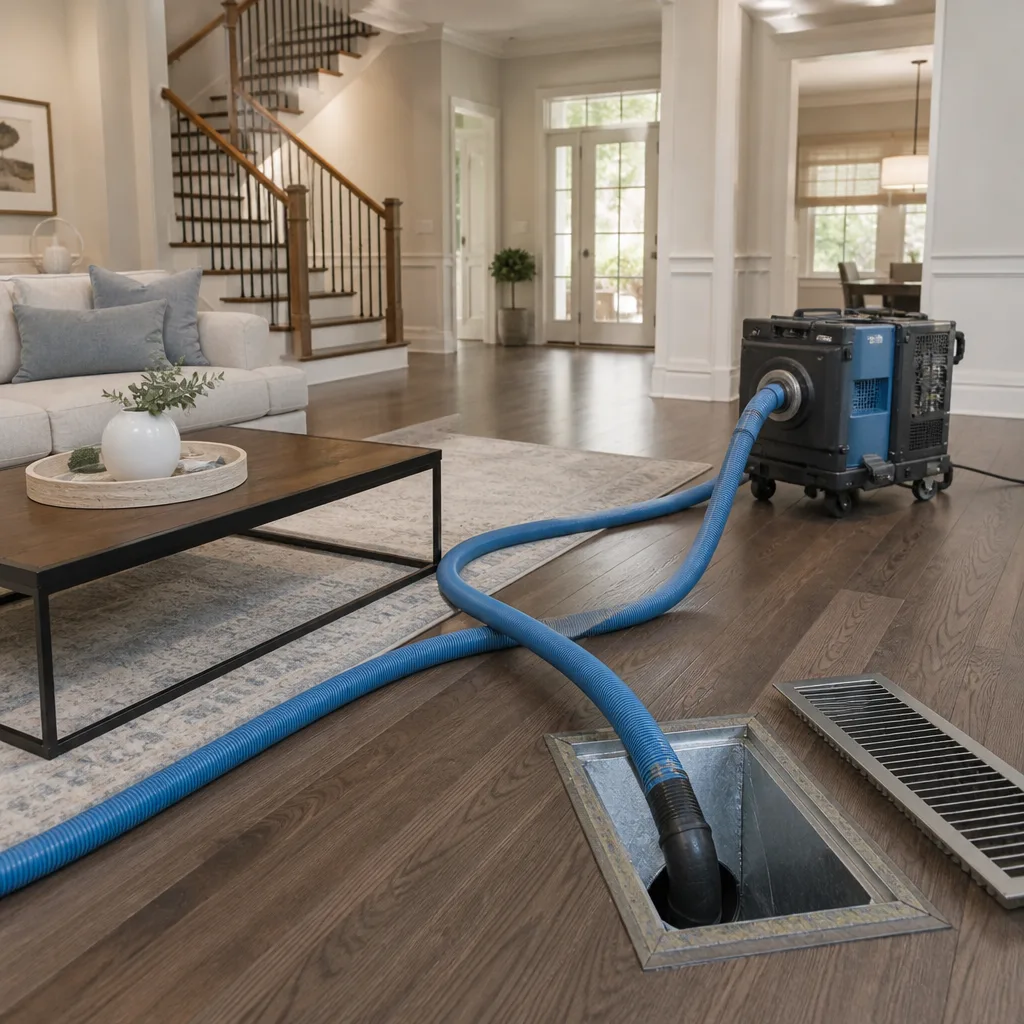 Whole-home duct cleaning
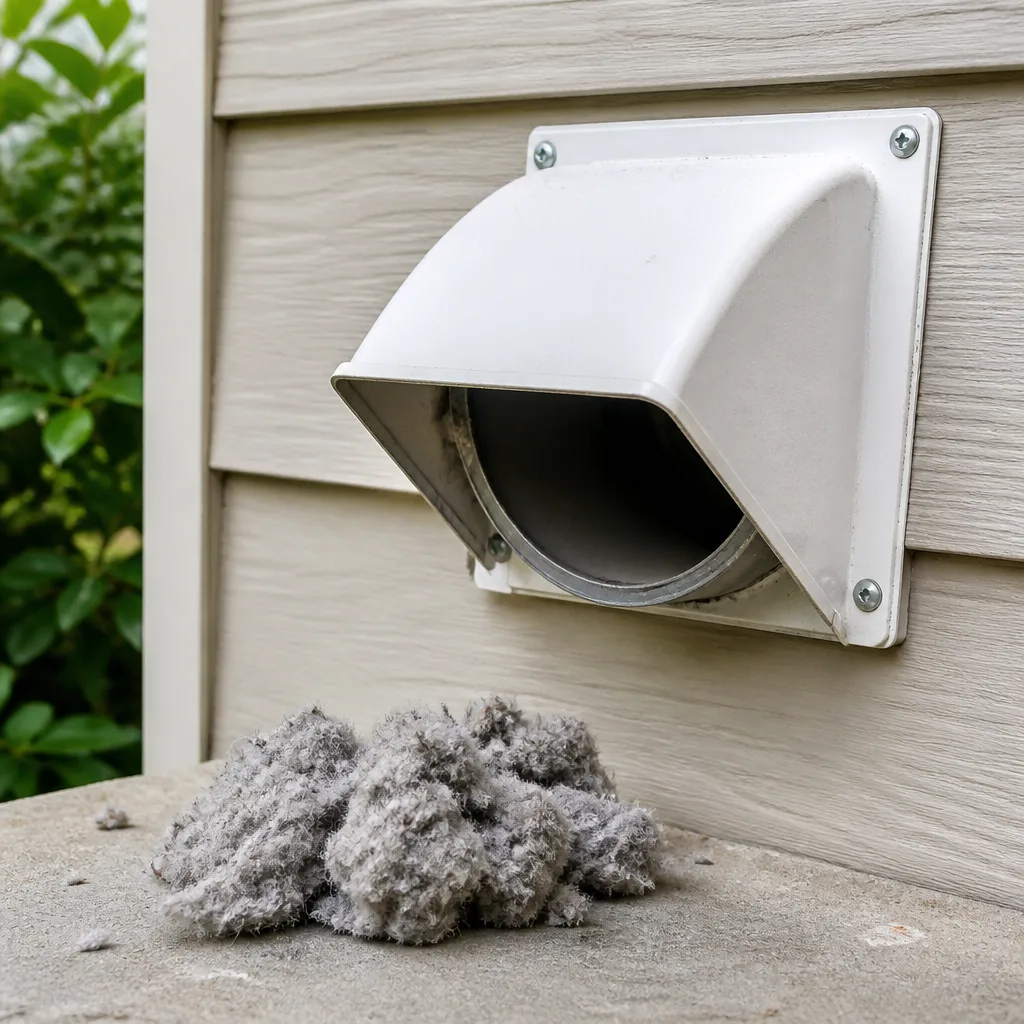 Dryer vent cleaning
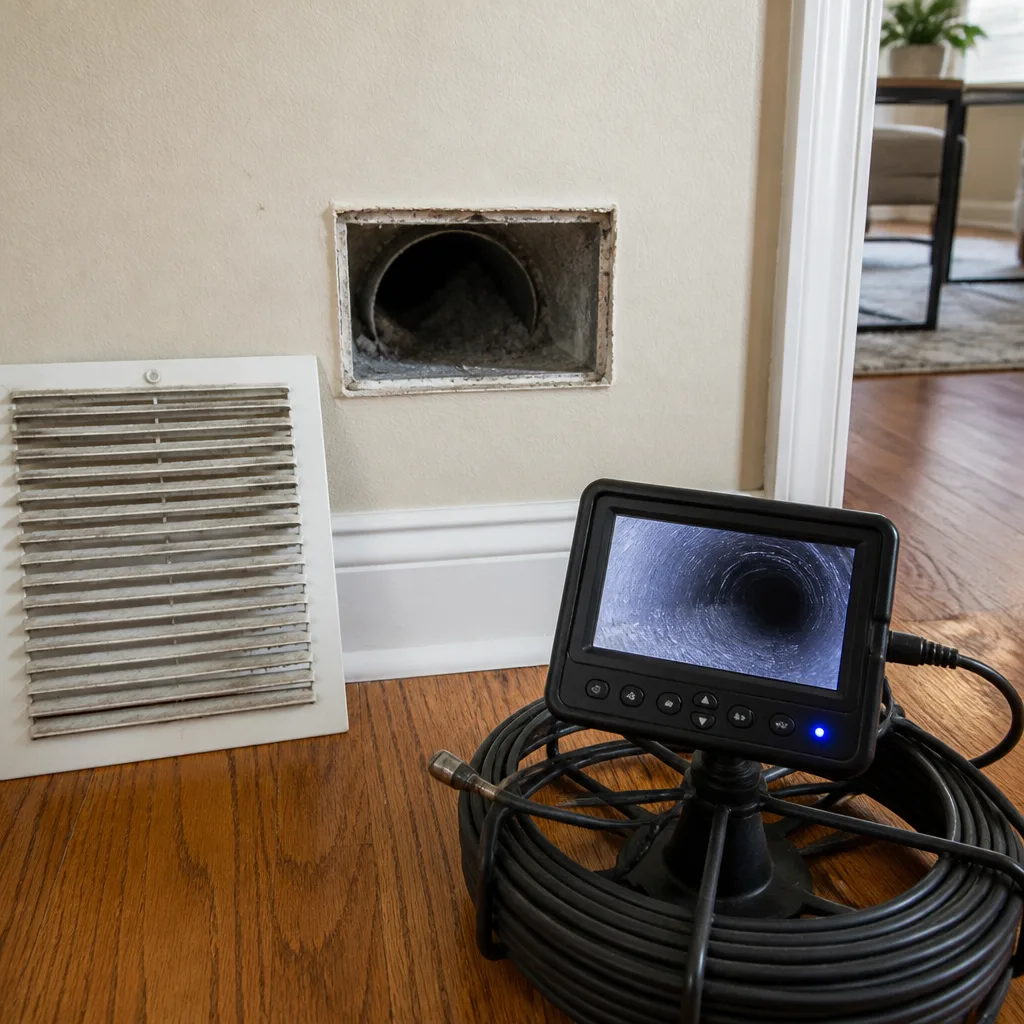 Camera inspection
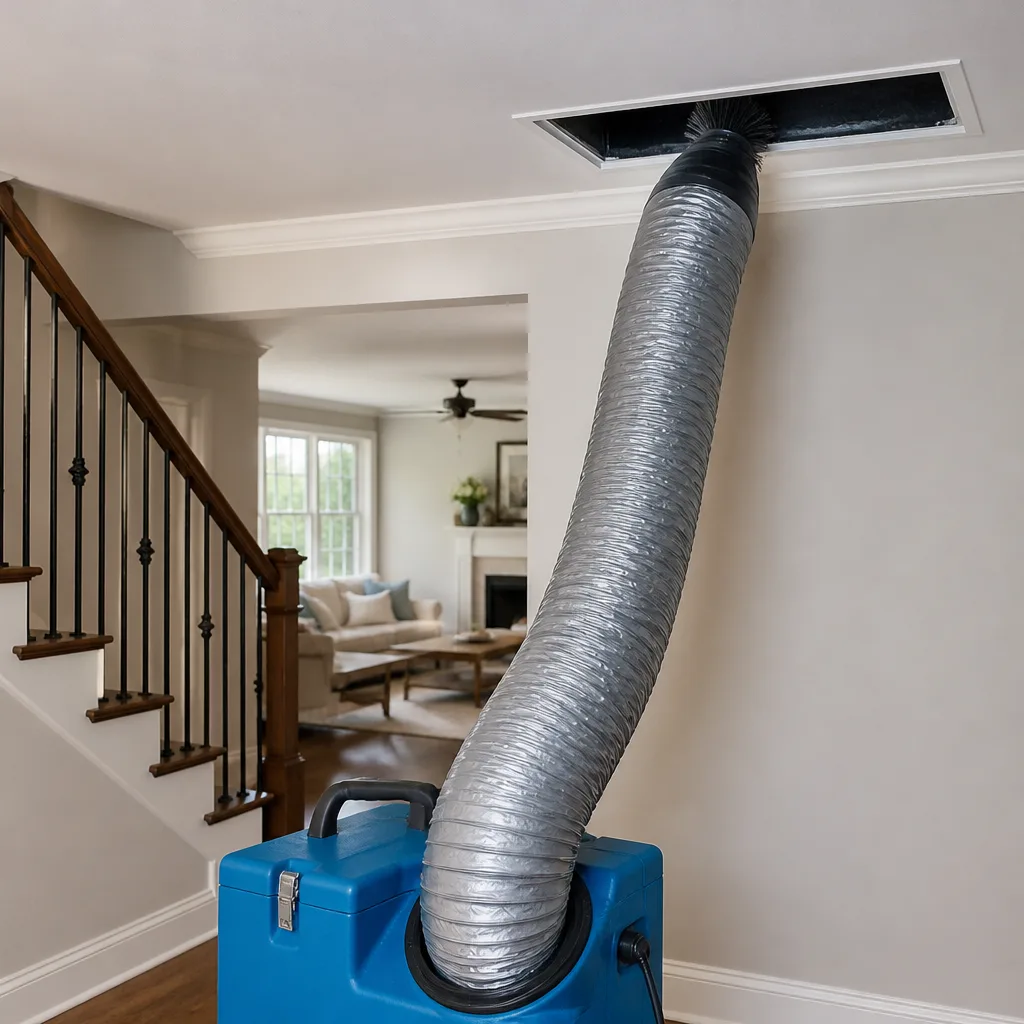 Sanitizing & deodorizing
Whole-system duct and dryer vent check with before-and-after photos - you see exactly what came out of your vents
That "$99 whole-house special" is a bait ad - the real number appears once they are in your hallway, or the "clean" is a shop-vac at the register. We photograph the inside of your ducts before and after instead.
DIY vs Professional Air Duct Cleaning: The Oxford Circle Homeowner’s Decision Guide
A shop vac pressed against a floor register cleans roughly 18 inches of duct in each direction. Everything past that point, which is most of your system, stays exactly as it was. Worse, the agitation can knock loose debris off the duct walls and push it into the air stream, so the room smells dustier afterward than before. That’s the part most DIY duct cleaning advice leaves out: this isn’t a skill problem. It’s an equipment physics problem. In this guide, we’ll explain what consumer tools can and can’t do, what’s genuinely worth doing yourself in an Oxford Circle home, and how to frame the cost of both paths so you can decide with clear numbers.
Quick Answer
DIY air duct cleaning in Oxford Circle is a surface maintenance task, not a true cleaning, because consumer vacuums can’t generate the negative air pressure needed to pull debris out of the system. A professional clean reaches the full duct run with source-removal equipment and typically produces a measurable difference in airflow and particulate load. What you can do yourself is keep registers, return grilles and filters clean between professional visits.
Styles & brands we work with
- Whole-home duct cleaning
- Dryer vent cleaning
- Camera inspection
- Sanitizing & deodorizing
Table of Contents
- The Equipment Physics Problem: Why a Shop Vac Isn’t a Duct Cleaner
- CFM, Negative Pressure and What “Source Removal” Actually Means
- What You Can Legitimately Do Yourself in an Oxford Circle Home
- Where DIY Goes Wrong in Older Oxford Circle Rowhouses
- The Real Cost-Benefit Math: Time, Tools and Outcomes
- How to Use DIY Maintenance Between Professional Cleanings
- The 10-Year View: Which Strategy Costs Less Overall
- How to Tell a Real Duct Cleaning From a Coupon Special
The Equipment Physics Problem: Why a Shop Vac Isn’t a Duct Cleaner
Every cleaning method has a physical limit, and for duct cleaning that limit is negative air pressure. Source removal, the standard the industry is built around, requires pulling a strong, sustained vacuum on the system while mechanically agitating the duct walls. The debris comes loose, then gets carried out by the airstream instead of settling back where it started. Remove either half of that equation and you’re not cleaning; you’re rearranging.
A consumer shop vac moves air at a modest rate and generates only a slight pressure differential at the hose end. Attach it to a register and that differential collapses almost immediately, because the duct network is large, leaky and full of branches. The vacuum is trying to evacuate a whole system through a small opening, and the system wins. Professional truck-mounted or high-capacity portable units work differently. They’re engineered to hold a strong negative pressure across the whole duct run while the technician works each branch with rotary agitation tools.
- Consumer shop vac: low sustained airflow, weak pressure differential, effective only at the immediate hose opening.
- Rotobrush and Nikro professional systems: rotary agitation plus high-volume extraction designed for duct interiors.
- Abatement Technologies negative-air and HEPA equipment: contained particulate removal so dislodged debris is captured, not redistributed into the living space.
This is why the tier of equipment matters more than the operator’s care and effort. The equipment brands we use, Rotobrush, Nikro and Abatement Technologies, belong to the same tool tier you’d see on commercial and remediation jobs, not the consumer aisle at a hardware store. When you compare DIY to professional air duct cleaning in Oxford Circle, you’re really comparing two different physical processes. We cover the full scope of what a proper service involves on our air duct cleaning page if you want the process detail.
CFM, Negative Pressure and What “Source Removal” Actually Means
Two numbers matter in duct cleaning: how many cubic feet of air per minute the machine can move (CFM), and how much negative pressure it can hold against a leaky duct system. A shop vac achieves a fraction of both. But the practical point isn’t the exact figure, it’s the ratio. The gap between consumer equipment and professional equipment is measured in multiples, not percentages, and source removal depends on that gap.
Source removal means removing the contamination itself, not just the visible dust near the opening. In practice that requires a sequence:
- Inspect and map the system. Identify supply runs, returns, transitions and any accessible flex duct before any cleaning starts.
- Contain the work area. Negative-air equipment captures dislodged particulate so it doesn’t settle back into the home.
- Establish suction on the system. The extraction unit pulls a sustained vacuum across the duct network while access points are opened.
- Agitate each branch. Rotary tools and air whips loosen debris from walls, seams and transitions so the airstream can carry it out.
- Clean the components. Registers, grilles, plenum and accessible HVAC components get cleaned as part of the same job.
- Verify and photograph. Before-and-after photos document what changed inside the duct, not just what the technician says changed.
If a step is skipped, the clean is incomplete. A technician who agitates without real suction raises dust. A technician who pulls suction without agitation only clears what was already loose. That’s the difference between a cleaning and a partial one, and it’s why we treat the whole air pathway as the unit of work. The path continues past the ducts themselves, which is where HVAC cleaning picks up.
What You Can Legitimately Do Yourself in an Oxford Circle Home
Plenty of maintenance belongs in your own hands, and we’d rather you do it than skip it. These tasks genuinely help and don’t require professional equipment:
- Clean registers and return grilles. Remove them where possible, wash them in warm soapy water, dry fully, and reinstall. Do this a few times a year, especially after any renovation dust.
- Replace filters on schedule. A clogged filter restricts airflow and stresses the blower. Check it monthly during heavy-use seasons and change it per the manufacturer’s guidance.
- Vacuum the return grille face. A shop vac works here because you’re cleaning a flat surface, not the inside of a duct.
- Do a visual inspection of accessible flex duct. If you can see a run in a basement or utility space, look for kinks, disconnected joints, or crushed sections. Note them for a professional to fix.
- Keep the area around return grilles clear. Furniture, rugs or stored boxes blocking a return reduce system efficiency and pull more dust into the airstream.
- Watch for musty smells or visible dust streaks. Both are signals worth a professional look, not a DIY fix.
What you shouldn’t do is push a shop vac hose deep into a duct and run it back and forth. That’s the DIY move most homeowners try, and it’s the one that does the least good and carries the most risk. In Oxford Circle’s older rowhouses, duct systems are often short, interconnected and tucked behind finishes, so there’s no clean way to reach the interior without opening access points. Our technicians have up to 10 years of experience working on systems like these and know where the trouble spots usually sit.
Where DIY Goes Wrong in Older Oxford Circle Rowhouses
Oxford Circle’s housing stock is largely mid-century rowhouses and twins, and that changes the risk profile of any DIY work inside the duct system. Three problems come up again and again.
Asbestos-containing duct insulation in pre-1980 homes. Some duct wrap, tape and joint compounds from that era contain asbestos. Disturbing it with a shop vac hose or a hand tool can release fibers into the air, and those fibers don’t leave the home quickly. If your home predates 1980 and you don’t know what the duct insulation is made of, treat it as suspect until tested. That’s a job for a qualified professional, not a weekend project.
Loose connections in galvanized trunk lines. Sheet-metal duct joints are often sealed with mastic or foil tape that has dried and cracked over decades. Bumping a trunk with a vacuum hose can open a joint, and an open joint pulls attic or basement air, plus whatever’s in it, straight into your supply air. A cleaned but leaking system still wastes energy and draws in contaminants.
Dislodged flex duct and crushed runs. Flexible duct is easy to kink or pull loose. A shop vac head pushed into a flex run can tear the inner liner, and a torn liner becomes a trap for dust and a pathway for moisture.
These aren’t hypothetical worries. We’ve seen all three in Oxford Circle homes. The fix is either professional cleaning with proper containment or, if the insulation is suspect, an asbestos assessment first. The good news is that duct dryer vent cleaning is a separate risk category entirely, and it’s one of the highest-value services to schedule because lint buildup is a documented fire hazard. That’s a job we treat as a dedicated service, not an add-on.
The Real Cost-Benefit Math: Time, Tools and Outcomes
Let’s put dollars and hours on both paths honestly. DIY feels free because the shop vac is already in the garage. It isn’t free once you count the time, the tools and what the outcome actually is.
- DIY time investment: several hours per attempt, repeated because one pass doesn’t clear anything. Most homeowners spend a weekend and end up with cleaner registers and the same dusty duct interior.
- DIY equipment cost: a shop vac that can’t do the job, plus register brushes, flexible hose extensions and filter replacements. None of it bridges the pressure gap.
- Professional visit: a scheduled appointment, professional equipment operating at the correct pressure, agitation of every branch, component cleaning and before-and-after photos. One job, done once.
- Cost-per-outcome: the DIY dollar is spent on effort that produces surface results. The professional dollar is spent on the actual cleaning of the full system, including the parts you can’t see.
- Downstream savings: a sealed, cleaned system supports better airflow, which reduces blower strain and helps your HVAC equipment run the way it was designed to.
Here’s the framing that actually helps: measure cost per outcome, not cost per attempt. If a shop vac does 5% of the work and a professional does 95%, the shop vac isn’t the cheaper option, it’s just the option with less outcome attached. We don’t quote coupon prices and we don’t quote per-vent rates, because honest whole-system ranges vary too much by home. Every job gets one flat price per system, agreed before work starts, confirmed in a written estimate. That’s the number that matters.
How to Use DIY Maintenance Between Professional Cleanings
If you’re going to schedule a professional clean, the smart move is to make that clean last longer with some simple upkeep. A short monthly routine keeps the system from reloading quickly. Here’s a sequence that works for most Oxford Circle homes:
- Monthly: check and replace the filter. Match the size printed on the old filter and use the same or better filtration rating your system supports.
- Monthly: vacuum the face of each return grille. This is a flat surface and a shop vac handles it fine.
- Quarterly: wash removable supply registers. Soap and water, dry fully, then reinstall. Don’t let water sit in the boot.
- Quarterly: walk the accessible duct routes. Look for new kinks, sagging flex runs or opens in mastic. Note anything suspicious.
- Twice a year: inspect the blower and air handler area. Dust on the blower wheel is a sign the system is loading up and a call may be due.
- After any renovation: clean the registers and change the filter. Drywall dust and sawdust love a return grille.
This routine doesn’t replace professional cleaning. It stretches the interval between visits by reducing how fast dust reaccumulates, and it catches small issues before they become repair jobs. If you notice musty smells, visible dust streaks near registers, or allergy symptoms that get worse indoors, that’s a signal to schedule rather than wait. Air quality you can measure starts with knowing what’s actually in the system, and a proper inspection tells you that.
The 10-Year View: Which Strategy Costs Less Overall
Ten years is a useful frame because duct systems don’t change much on that timescale. Housing stock in Oxford Circle largely doesn’t either. Here’s how the two strategies tend to play out.
DIY-only for ten years. Year after year of weekend shop-vac sessions, filter changes, and register washing. The ducts aren’t cleaned, dust loads continue to accumulate, and small issues like dried mastic and kinked flex runs go unnoticed. Blower strain and energy costs drift upward slowly, and eventually you’re paying for a professional clean anyway, plus repairs that wouldn’t have been needed if the system had been maintained.
Professional clean plus DIY upkeep. A scheduled clean every few years, with the DIY routine above keeping the system from reloading in between. Filters and registers stay clean, accessible ductwork gets checked, and small problems get flagged early. Over ten years, the professional path is typically the one that keeps the system running as designed, with fewer surprises.
- DIY only: lower upfront cost, higher cumulative time cost, no reduction in duct debris, growing risk in older homes.
- Professional plus DIY upkeep: higher upfront cost, much lower cumulative time cost, actual cleaning of the full system, and early detection of repairable issues.
- Recommended cadence: a professional clean every few years, with monthly filter checks and quarterly register cleaning in between.
- Older pre-1980 homes: professional inspection is the only safe starting point before any DIY attempt, because of asbestos risk.
If you’re weighing filtration upgrades at the same time, whole-home options from Honeywell and Aprilaire integrate at the air handler and complement a clean, sealed system. Filtration works better when the ductwork behind it is clean.
How to Tell a Real Duct Cleaning From a Coupon Special
The biggest objection homeowners raise is the bait-and-switch reputation. A teaser price gets you a technician on site, then a much larger invoice arrives once they’re inside. Here’s how to tell the difference before you book:
- Ask for whole-system pricing, not per-vent. A real quote is priced on the system, not on the number of registers.
- Ask what equipment will be used. If the answer isn’t a described extraction and agitation system, it’s not a source-removal clean.
- Ask for before-and-after photos as standard. Not on request. Standard. If the technician can’t document the inside of the duct, ask why.
- Ask who does the sealing and repair. A clean system that leaks isn’t finished. Duct repair and sealing should be part of the same scope, not a second contractor.
- Ask about containment. Abatement Technologies negative-air and HEPA equipment is what keeps debris out of the living space during cleaning.
- Ask about air quality treatment. Biological and particulate control is a separate step from mechanical cleaning. It should be offered, not upsold afterward.
Five distinct services under one company, cleaning, dryer vents, HVAC, repair and sealing, and air quality, means you’re not coordinating three contractors for one problem. That’s single-source accountability, and it’s what we offer. You can read more about the full scope in our Air Duct Cleaning Oxford Circle overview, or explore the dryer side in our dedicated dryer vent cleaning page.
Common Mistakes to Avoid
- Assuming a shop vac is the same as a duct cleaner. It isn’t. Consumer vacuums can’t generate the negative pressure required for source removal, so the work stays surface-level no matter how long you run it.
- Agitating ductwork in a pre-1980 Oxford Circle rowhouse without an asbestos assessment. Insulation and joint compounds from that era can contain asbestos, and disturbing it is a health risk, not a dust nuisance.
- Assuming “clean” means “done.” A cleaned system with leaking joints still wastes energy and pulls in contaminants. Duct repair and sealing finish the job.
- Booking on a teaser price. A coupon figure that turns into a much larger invoice is the industry’s biggest complaint. Get whole-system pricing in writing before anyone arrives.
- Skipping the dryer vent. Dryer vent lint buildup is a documented fire risk. Treat it as a scheduled service, not an add-on.
- Cleaning vents without cleaning the returns. Dust hidden in the return trunk doesn’t reach the supply registers until it enters the air handler. Both sides need cleaning.
- Ignoring musty smells as “just a smell.” Persistent mustiness often points to moisture in the system, which is a different problem than dust and needs inspection, not a filter change.
See the difference
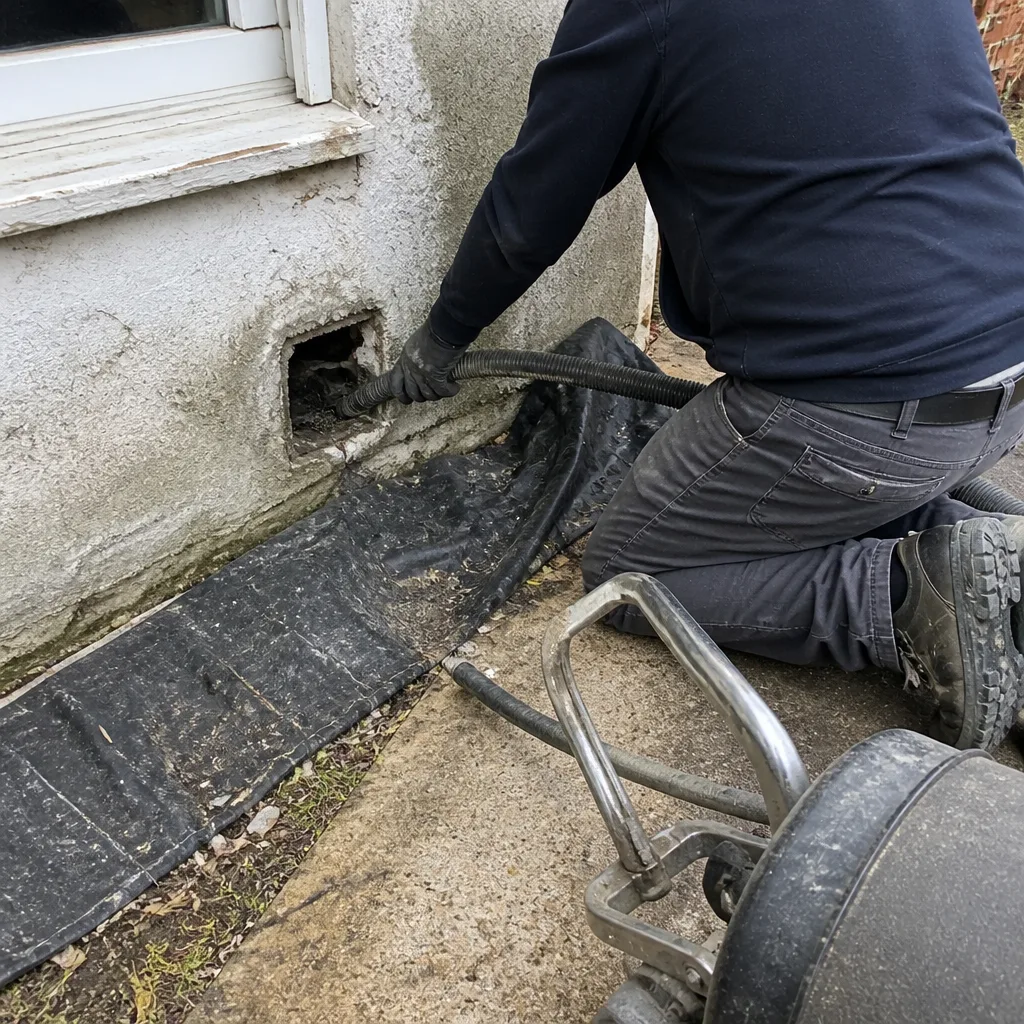 Before
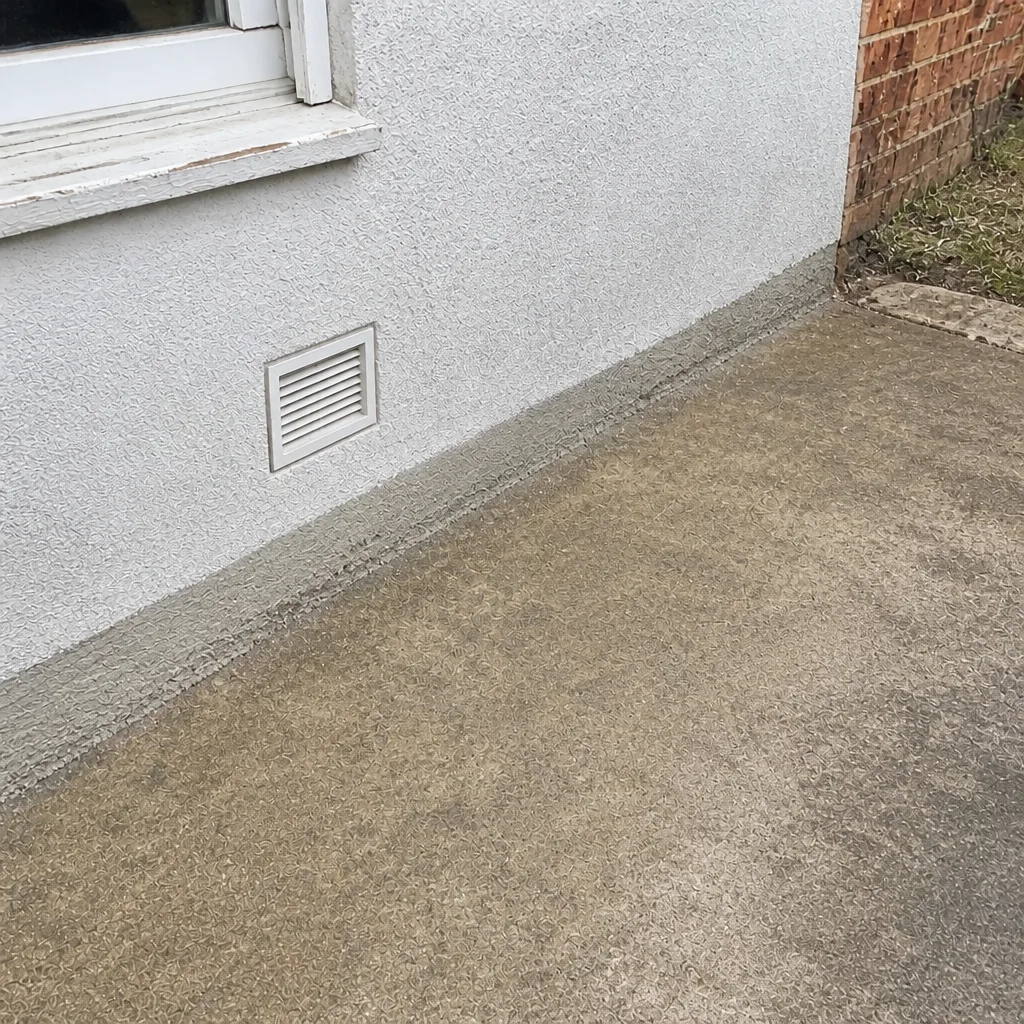 After
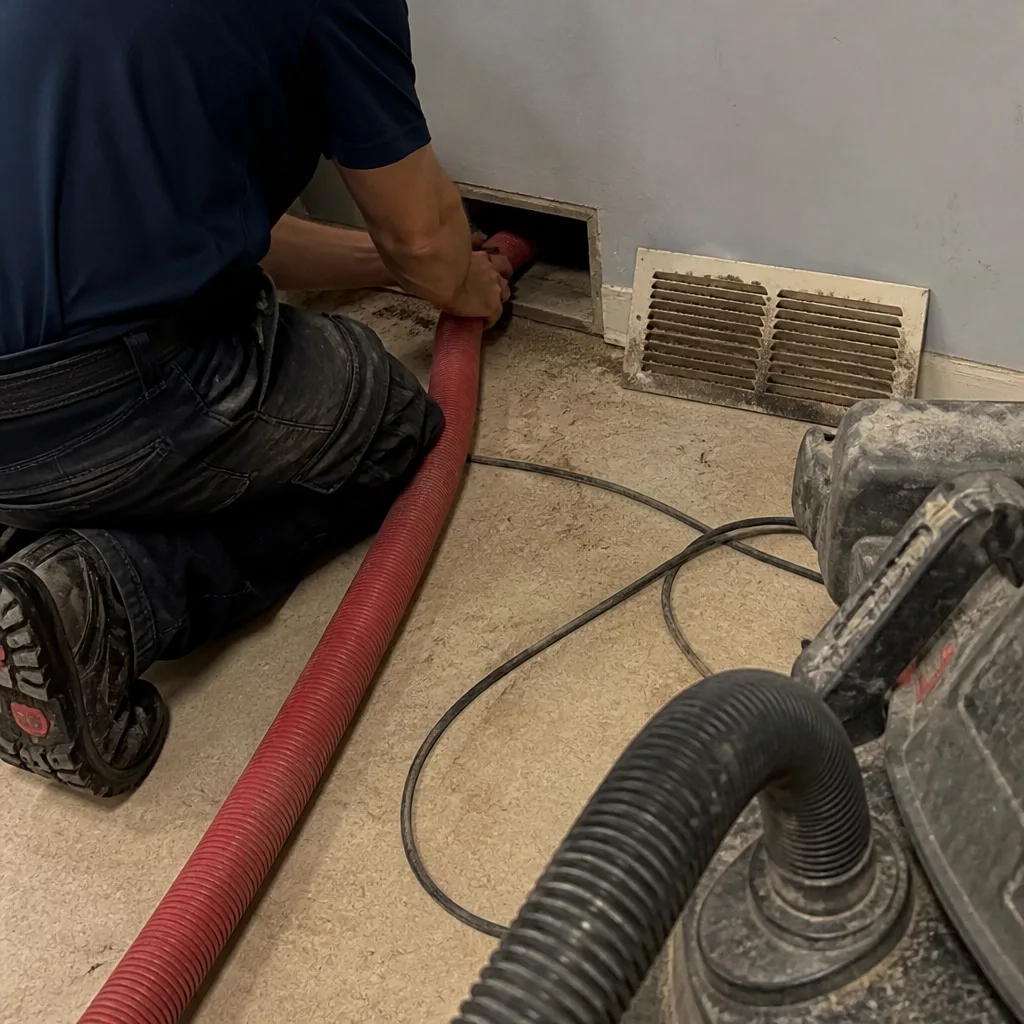 Before
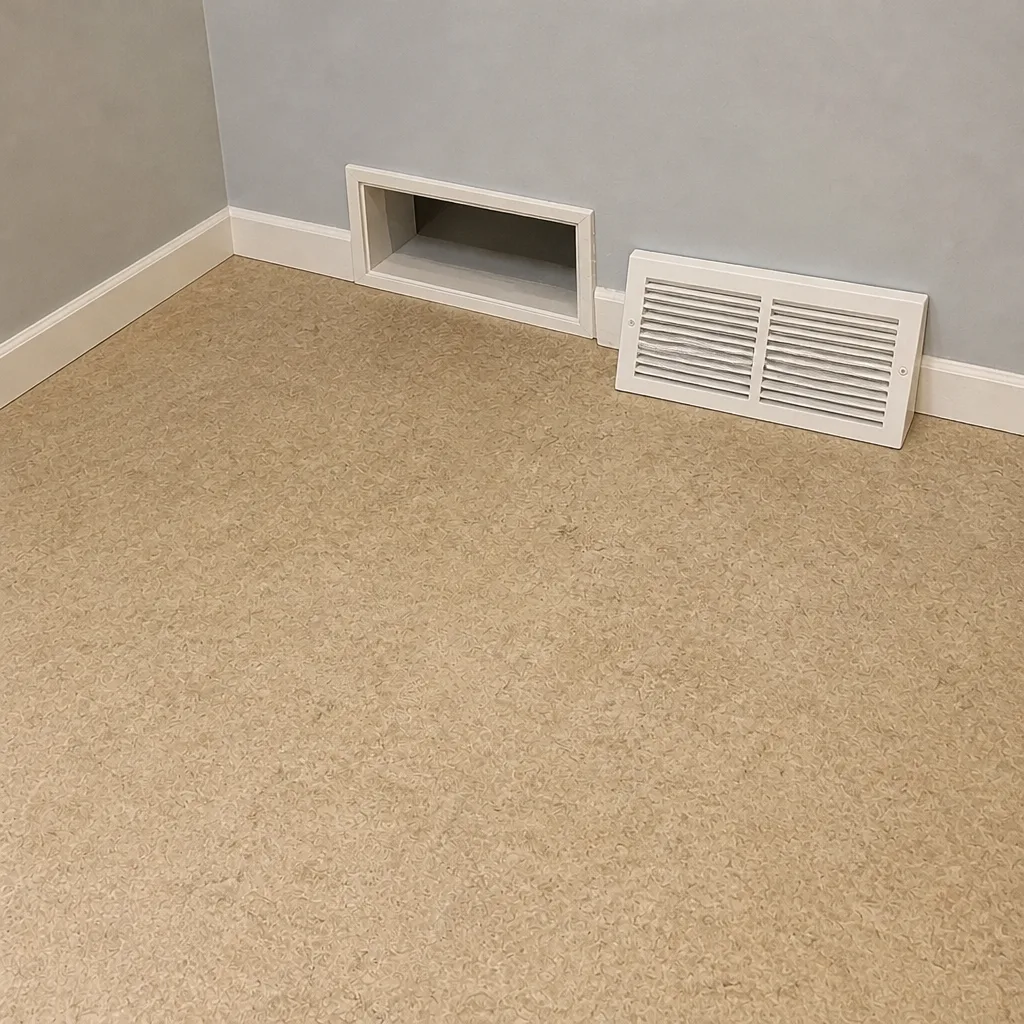 After
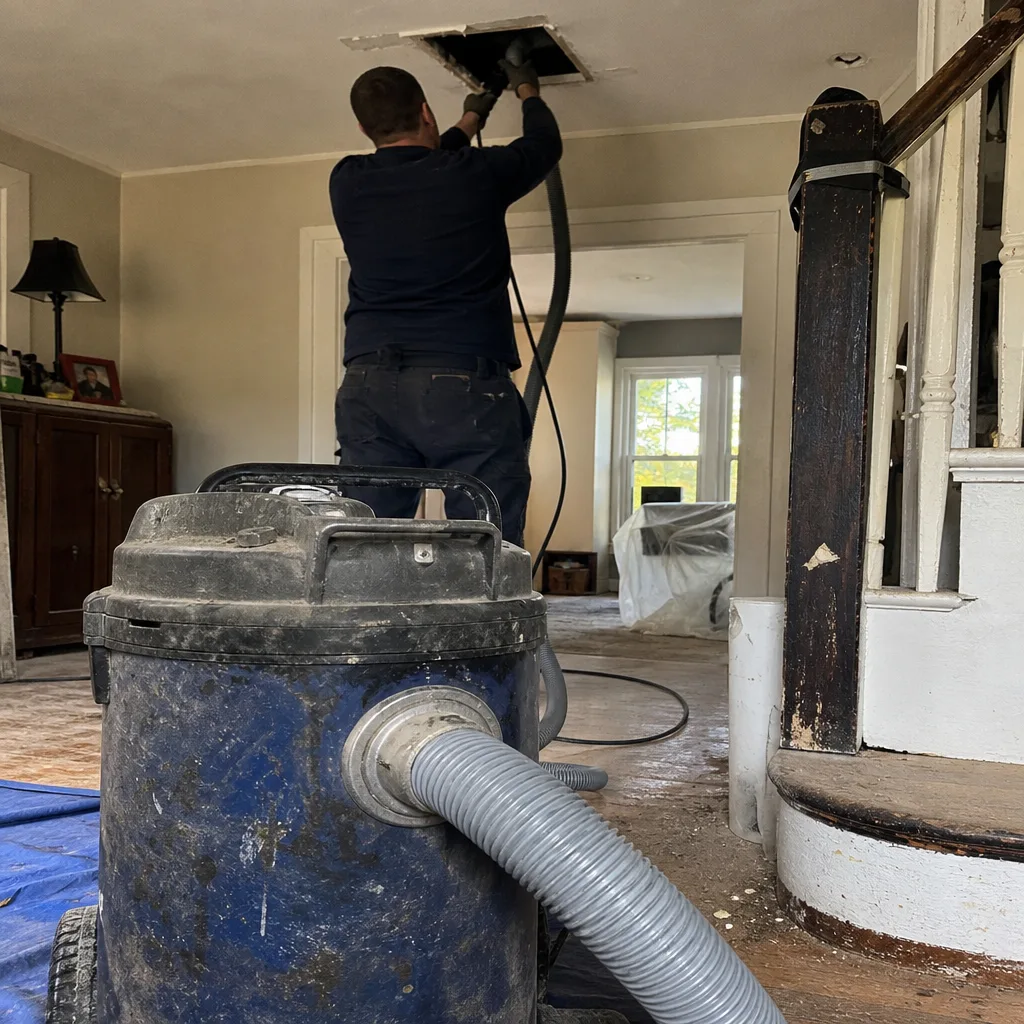 Before
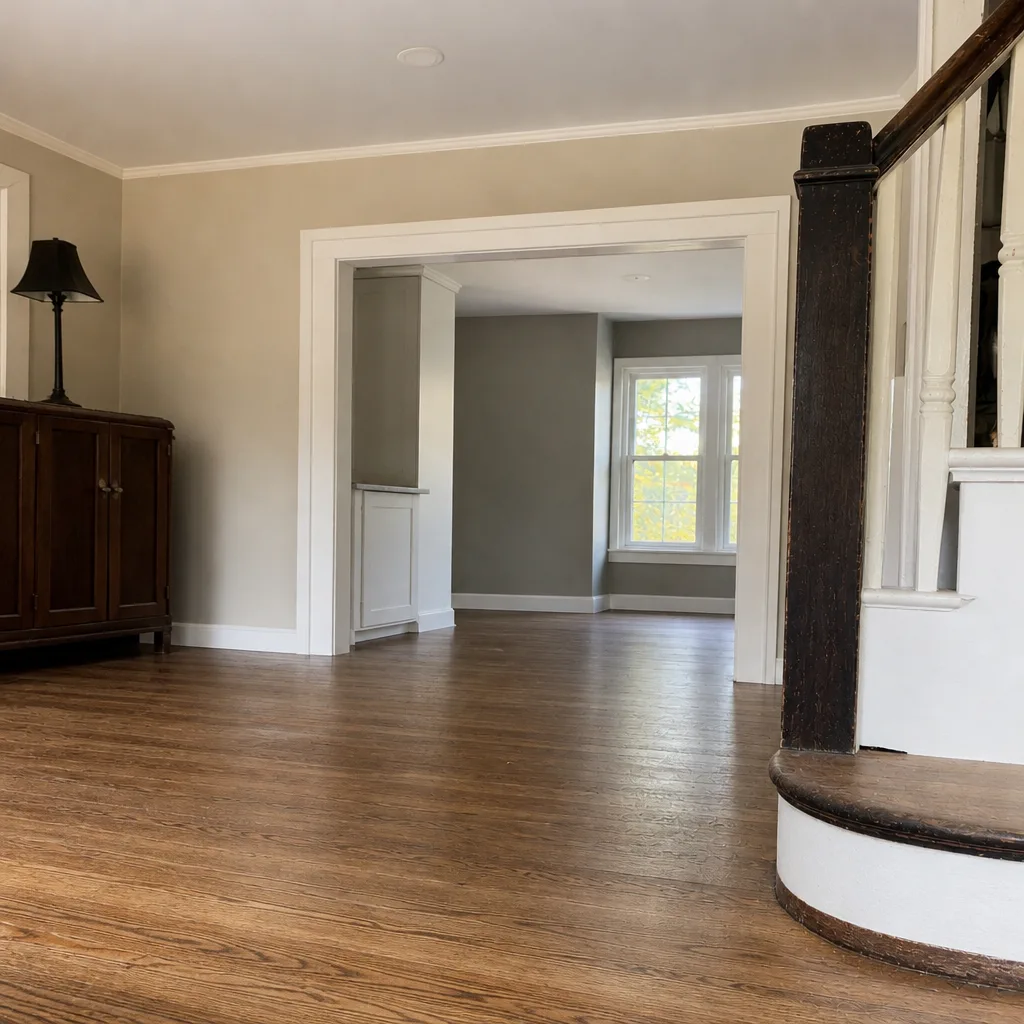 After
When to Call a Professional
Call a professional when the symptom points to the inside of the duct system and not the surface. Common triggers in Oxford Circle homes include persistent musty odors, visible dust streaks around return grilles, allergy symptoms that get worse indoors, noticeably uneven airflow between rooms, and higher energy bills without a clear cause. If your home predates 1980 and you’ve never had the duct insulation inspected, start there. If a DIY attempt has already dislodged loose connections, stop and call. If you’ve recently renovated and the filter loaded with dust quickly, call.
Air Duct Cleaning Oxford Circle offers free estimates in Oxford Circle. Call (833) 498-1334 to schedule. We answer 24/7. Fast dispatch from 7am to 7pm, Sunday through Friday. Every job gets one flat price per system, agreed in a written estimate before work starts, plus before-and-after photos of your own ducts.
Frequently Asked Questions
You can clean registers, return grilles and flat surfaces yourself, but a shop vac can’t clean the inside of the duct system. Consumer vacuums generate only a fraction of the negative pressure required for source removal, so the debris stays. Anything beyond about 18 inches past the register is essentially untouched.
Pricing varies by home size, system layout and how much repair or sealing is needed, so we don’t quote per-vent rates or teaser prices. Every job gets one flat price per system, agreed before work starts and confirmed in a written estimate. Call (833) 498-1334 for a free estimate.
Cheap quotes often reflect a partial clean, consumer-grade equipment, or a teaser price that grows once the technician is on site. A real source-removal clean requires professional-grade machinery, containment equipment and time on each branch. The written estimate is what you should compare, not the headline figure.
Before-and-after photos of your own ducts are the standard. A professional job shows what changed inside the system, not just what the technician says changed. If photos aren’t standard practice with the company you’re considering, ask why before you book.
For most Oxford Circle homes, a professional clean every few years is enough, with monthly filter checks and quarterly register cleaning in between to slow the reload rate. Homes with pets, recent renovations, or anyone with allergies often benefit from a shorter interval.
Not always. Homes built before 1980 may have asbestos-containing duct insulation or joint compound, and disturbing it is a health risk. Loose joints in galvanized trunk lines and torn flex duct liners are also common DIY casualties. Have the system inspected by a professional first.
The Bottom Line
DIY air duct cleaning is a surface maintenance task, not a cleaning of the system. Consumer vacuums can’t produce the negative pressure source removal requires, so the deep dust, the debris behind the register boot, and the contaminants in the return trunk stay put. What you can do yourself is worth doing: filters, registers, return grilles, and visual checks. What you can’t do is clean the duct interior safely, especially in a pre-1980 Oxford Circle rowhouse where asbestos insulation and loose joints are real risks. The cost-per-outcome math favors a scheduled professional clean plus DIY upkeep between visits. For a free estimate, call (833) 498-1334. We answer 24/7. Fast dispatch from 7am to 7pm, Sunday through Friday.
Written by the team at Air Duct Cleaning Oxford Circle.